Wednesday, April 15, 2015

A New Challenge


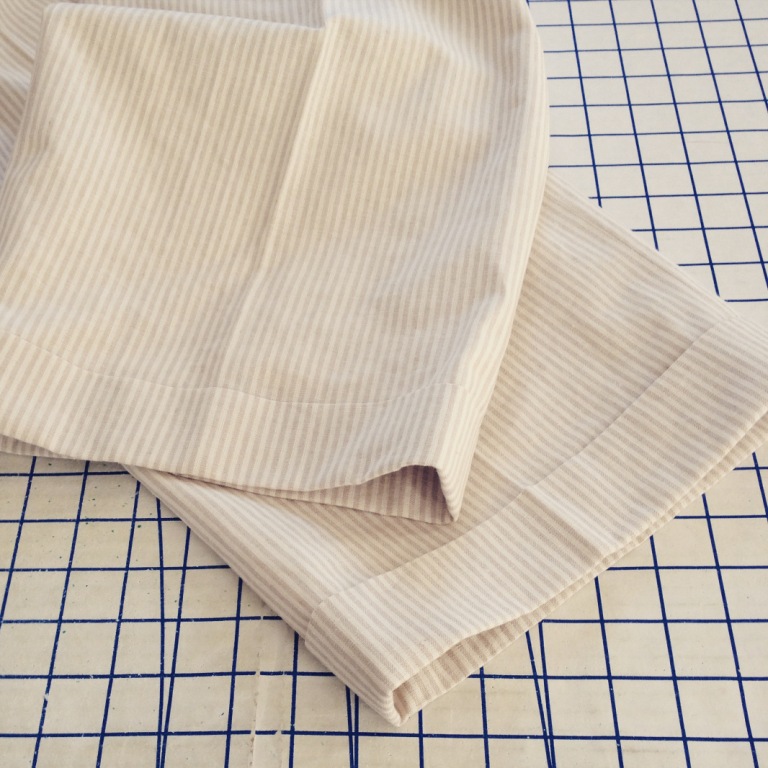
This is the second pair of pants I have ever made (here is the first).  


Well, I take that back . . . I made a few pairs of bloomers many years ago which count as bifurcated garments, I suppose.


Ridiculous, right?  Or maybe not . . . I have a pair of jeans somewhere, but I have not worn them in many, many years.  And they did not get a whole lot of wear, even back then.  So why spend my precious sewing time making something I will never wear?


Well, I have finally figured out one of the reasons I dislike wearing pants.  Off the rack trousers are rarely comfortable.  I hate waistbands that dig into my hips.  And I am quite confident I am not the only female who has extra squishy bits several inches below my waistband . . . google "muffin top" if you have any doubts.  On second thought, don't . . . it isn't a pretty sight.  Why, why, why is this considered an appropriate fit, and why is it impossible to find a pair of pants that sits at the waist??!  


But there is another issue . . . not only do I have a long torso from under-bust to waist, but my waist to hip measurement is also longer than the standard.  It took a few years of sewing straight skirts to realize I needed to add some length to the top of the skirt pieces in order to get the hip curve to sit in the proper place for my figure.


This alteration is also necessary (perhaps even more so) for a pair of pants.


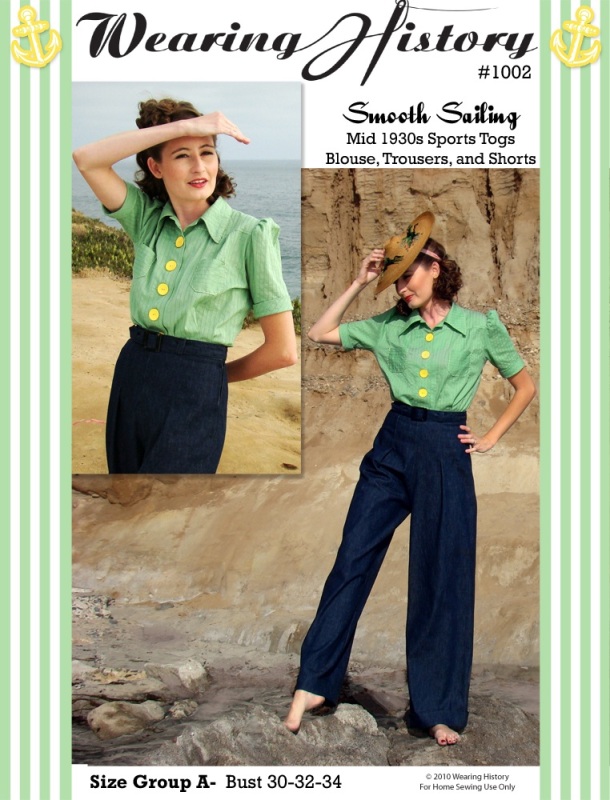
And because I have been tempted each time I see a new version of Wearing History's Smooth Sailing Trousers, I thought it was time to make myself another pair of pants.  


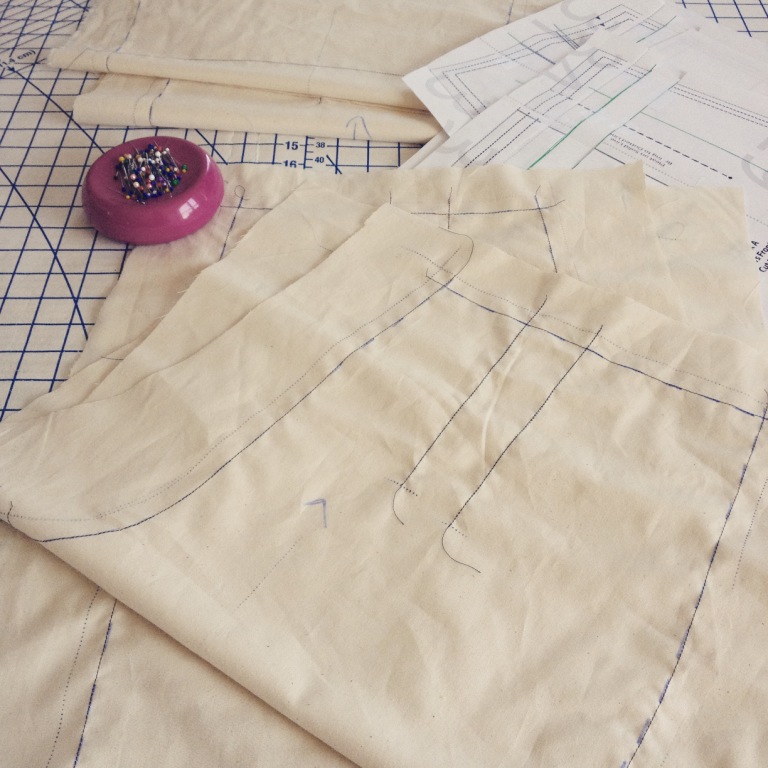
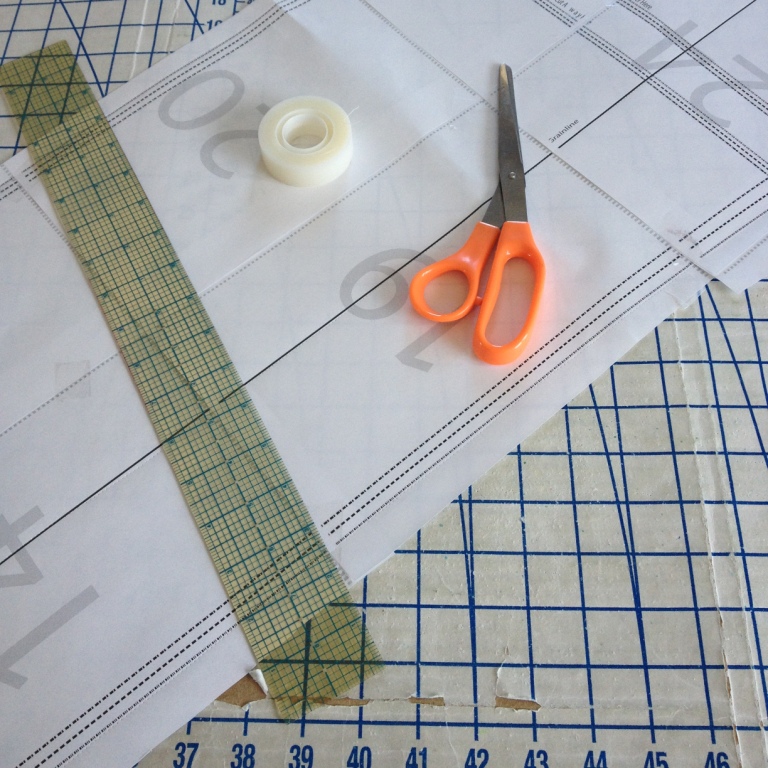
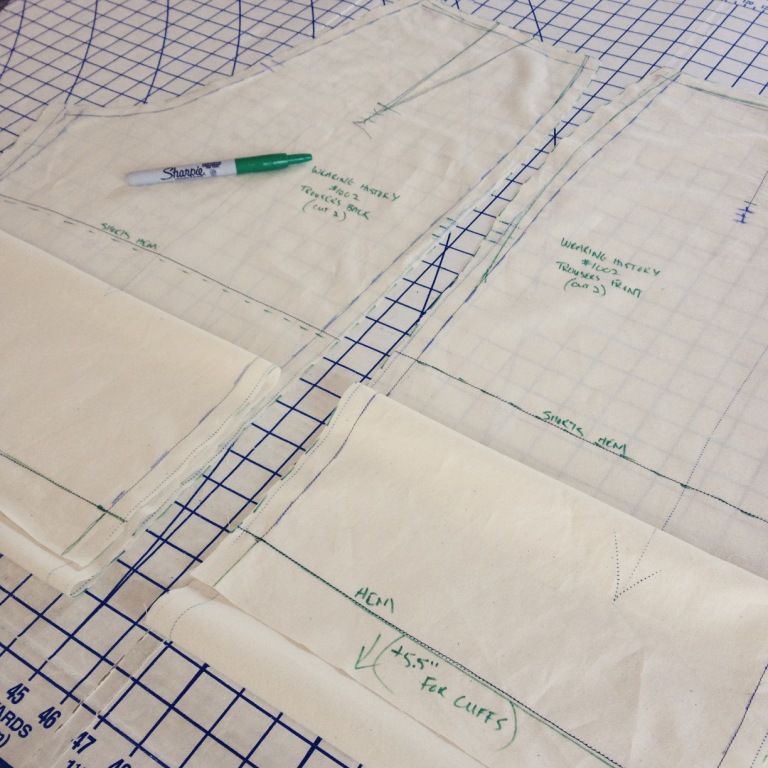
In a continuing fight with PDF patterns, I managed to mess up my first try, not realizing that the paper had been overlapped too much until I was trying my first muslin on.


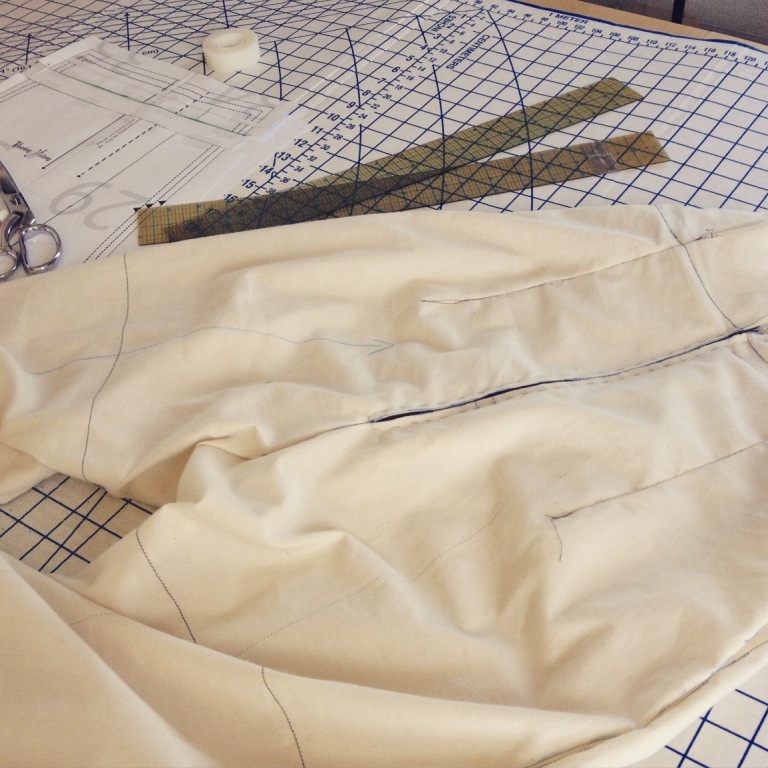
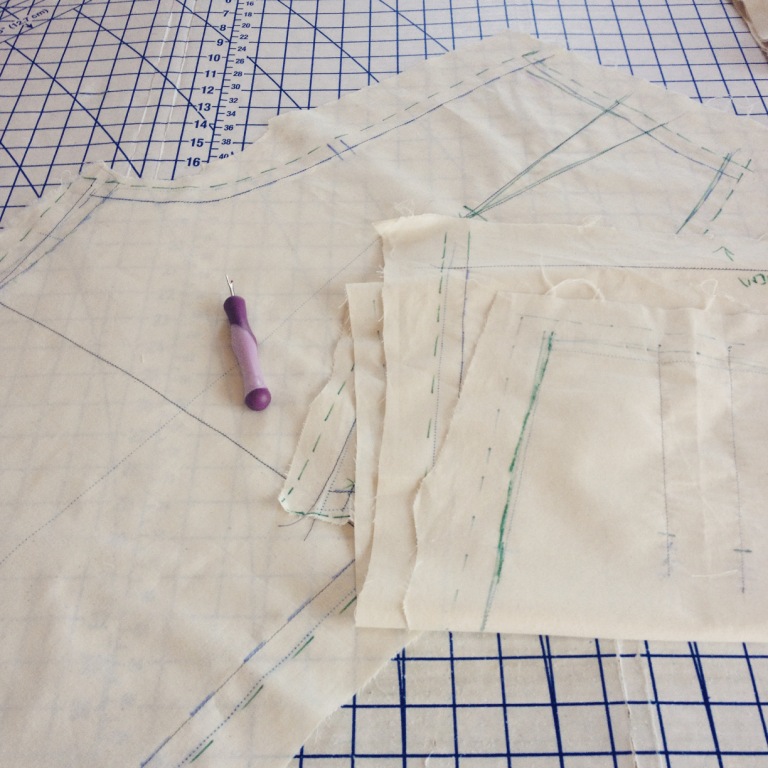
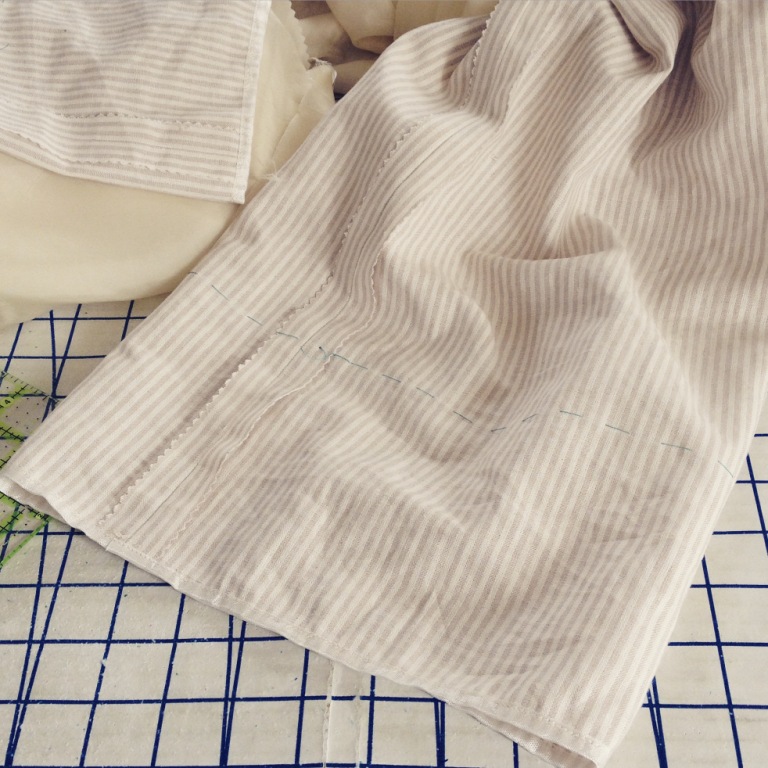
So I started over . . . and while I was at it, added one inch of extra length by slashing through the hip area.  After consulting a couple of fitting resources, I also added to the crotch length by extending the interior seamline.  I would not have come up with that alteration on my own - hooray for learning new things!


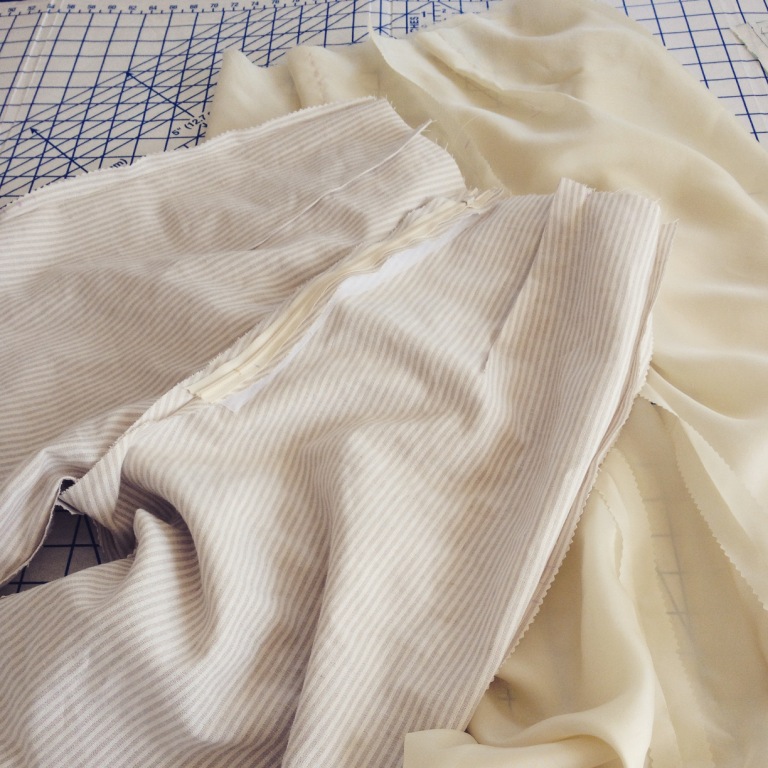
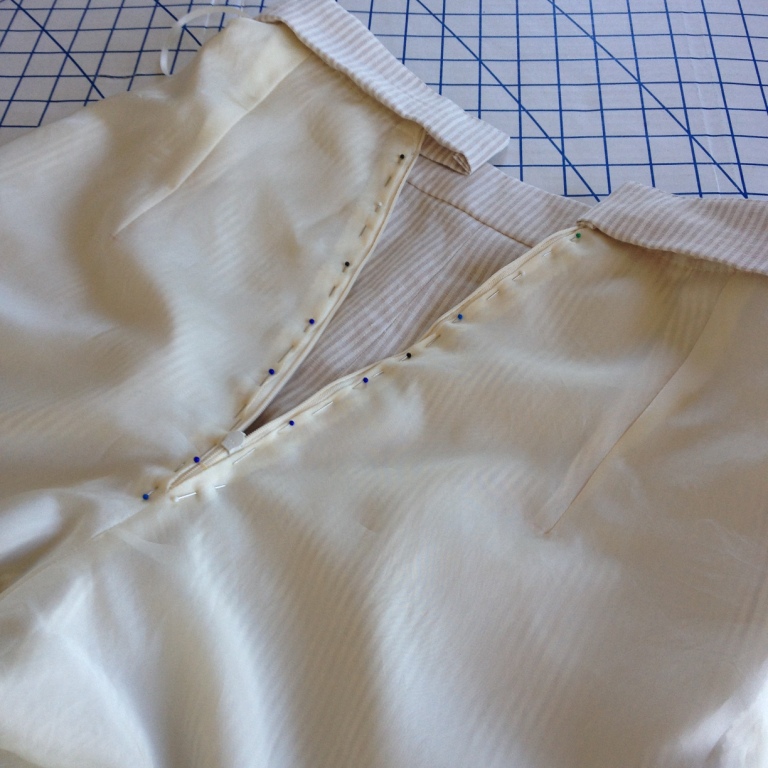
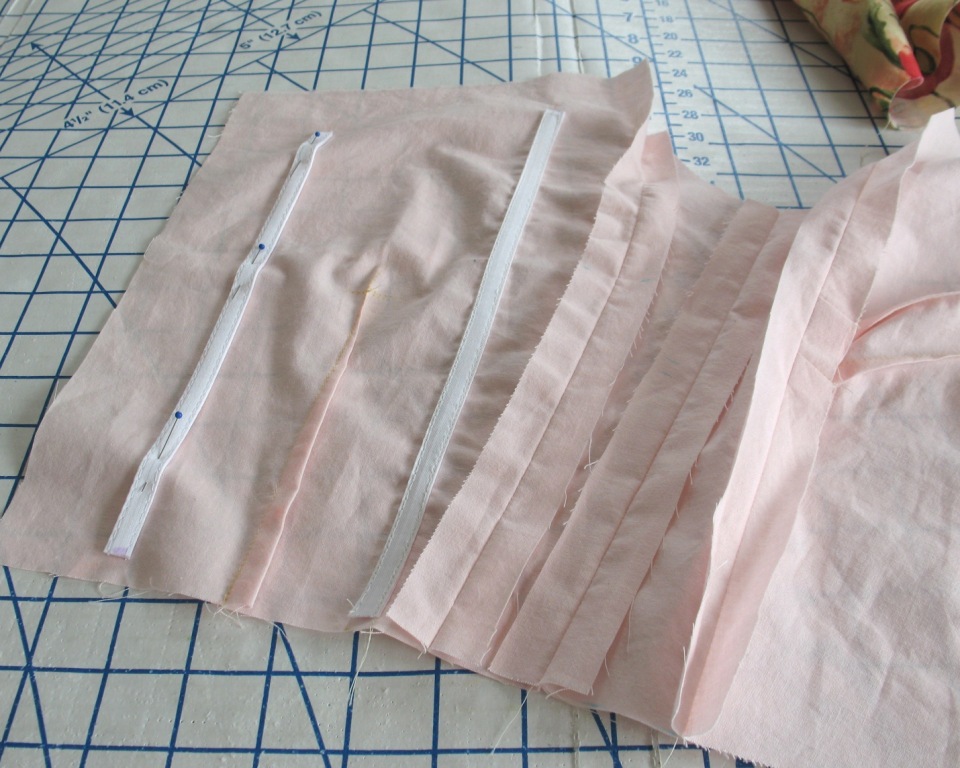
I pinked the seams and added a lining.


And here is another reason I finally got around to making myself a pair of pants . . . an excuse to wear these shoes!


Tuesday, April 7, 2015

In Vogue for the Summer

The new summer Vogues have been released.  Part of me wants to find many gorgeous new patterns, another part almost hopes that there is nothing exciting to tempt me and/or distract me from the fifty other projects I have lined up in my head.  But it would seem that they are continuing to release more interesting/complicated designs . . . and you know what that means.

Vogue 9105

There are two new vintage reproductions.

Vogue 9105


Vogue 9105 has a lovely diagonal front opening that closes with buttons.  This is certainly not my favorite version of the asymmetrical button opening, but I can live with it.  It reminds me of Vintage Vogue 1043 (now out of print) which I love and keep meaning to make myself a second version.

Vogue 9105

This new offering features “skirt stiffening” in the form of muslin.  I am curious to see what exactly is going on with that!  I have never heard of muslin being used as a “stiffening” material, although I have seen first-hand examples of Pellon being used as an underlining in vintage dresses.  I am also intrigued to see if the left front hooks into a side seam, and if the entire buttoned edge opens.  All that I know is the lack of a waist seam means this one hogs fabric like crazy (6 yards are required for 45” wide fabric – yikes!).  But I definitely want to peek inside this particular pattern envelope.

Vogue 9105

I am really excited about Vogue 9106.  The skirt tiers are unlike any pattern I have in my stash, and I think this one is a winner!  Thank you, Lisa of "As I Said", for sending your pattern to Vogue!

Vogue 9106

This beauty is described as a "pullover dress" - say what?!  But wait, it has a side zipper . . . that makes more sense.  And isn't every dress a "pullover"?  Maybe they are clarifying that you cannot "step into" this one because it only unbuttons to the waist?  "Curiouser and curiouser!"

Vogue 9106

My only complaint is that both of these reproductions have a very similar feel and copyright date, which seems to be a trend in the Vintage Vogue line, now that I think about it.  

Vogue 9106

How about a little variation, and not two full-skirted, short-sleeved dresses in the same catalog?  And why did they start cramming the vintage reproductions in the smaller sized envelopes a few years ago?  I miss all of the extra space!

Vogue 9106

I also find myself strangely drawn to Vogue 1451 – or maybe not so strange considering my love of so many of Donna Karan’s designs.  I am very tempted to make this up and test my theory that everything I put on ends up looking old-fashioned!  I can't see it happening wearing a design like this, but who knows?!

Vogue 1451

Vogue 1447, a Tracy Reese design, also has some wonderful seaming that I might be inclined to try.

Vogue 1447

This one I am quite sure I would make look vintage.  The line drawing has a bit of a 1930s feel to me. 

Vogue 1447

And it may have something to do with the fabulous graphic print, but I love this Easy Options design.  

Vogue 9103

The back seaming is gorgeous.

Vogue 9103

I have been so good lately about working with stashed items, but I feel a pattern binge coming on . . .

Will any of the new Vogue offerings tempt you? 

Sunday, April 5, 2015

Fields of Poppies


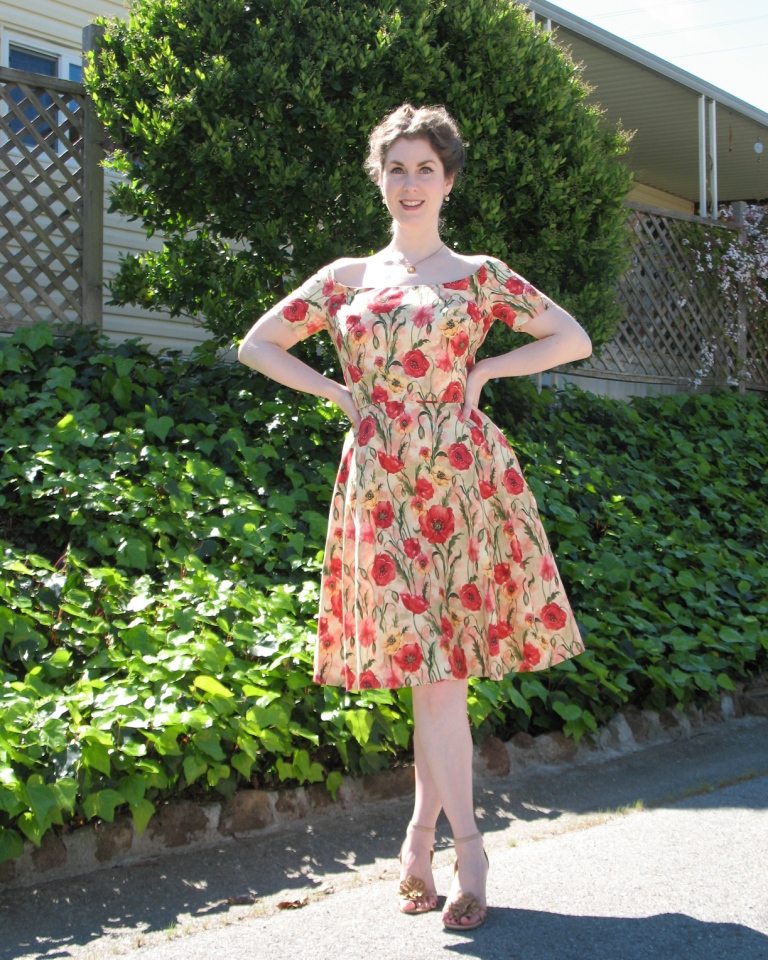
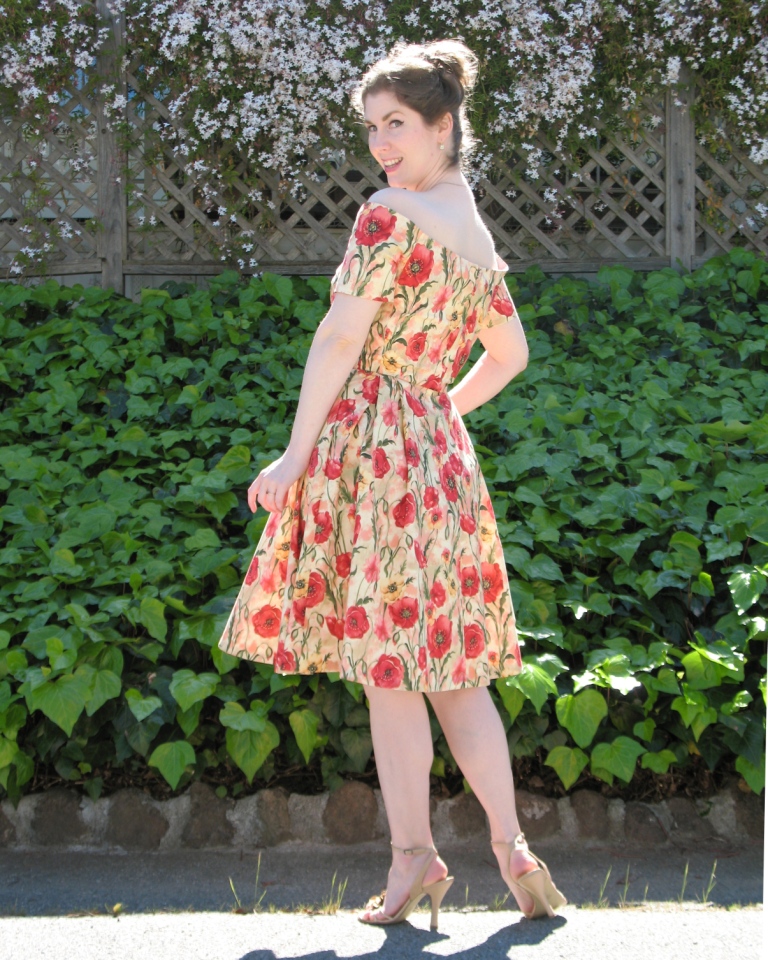
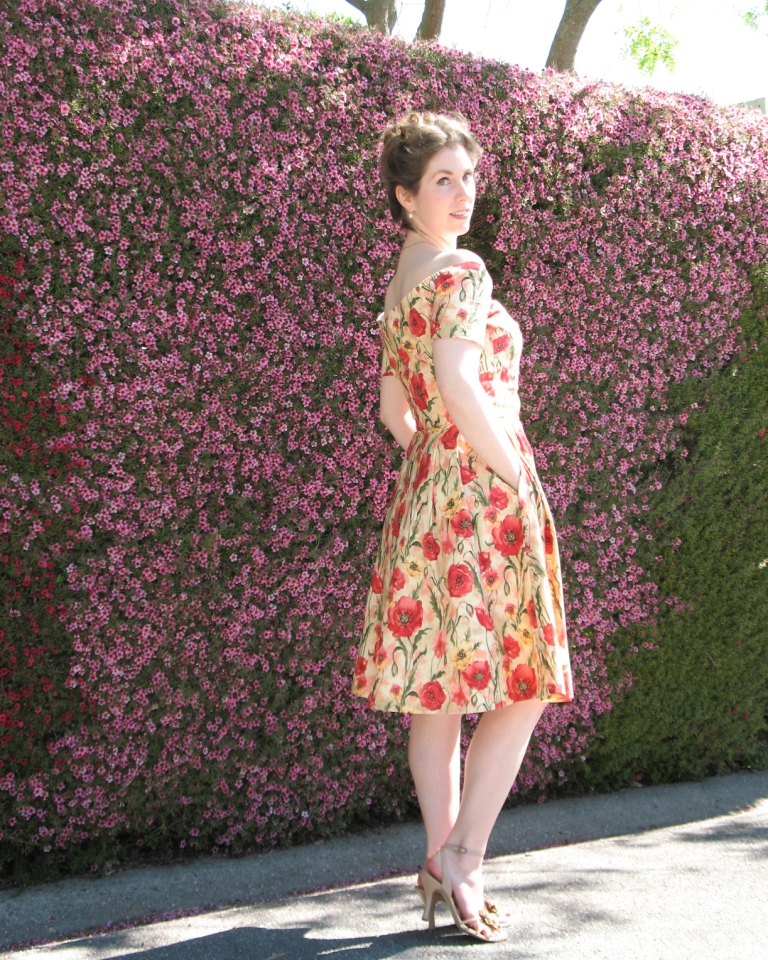
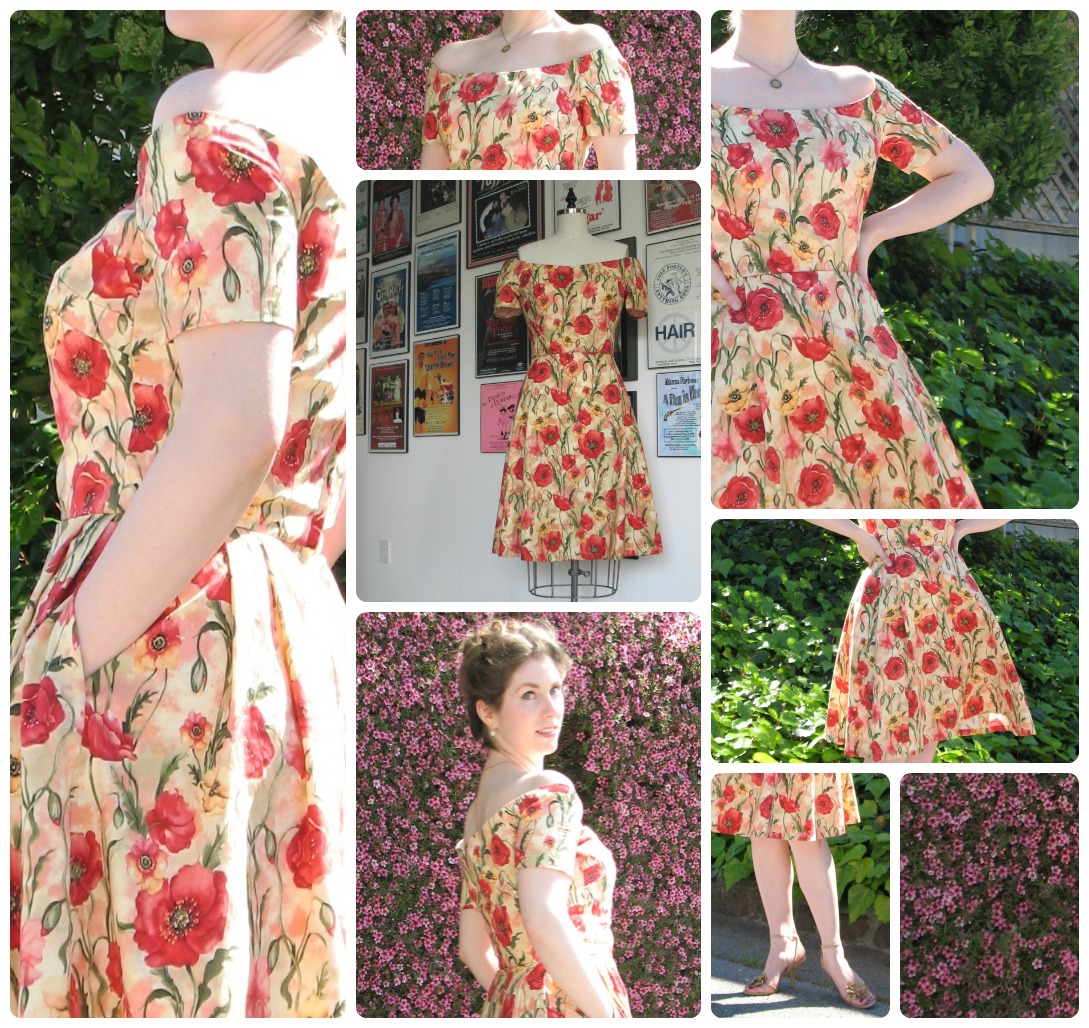
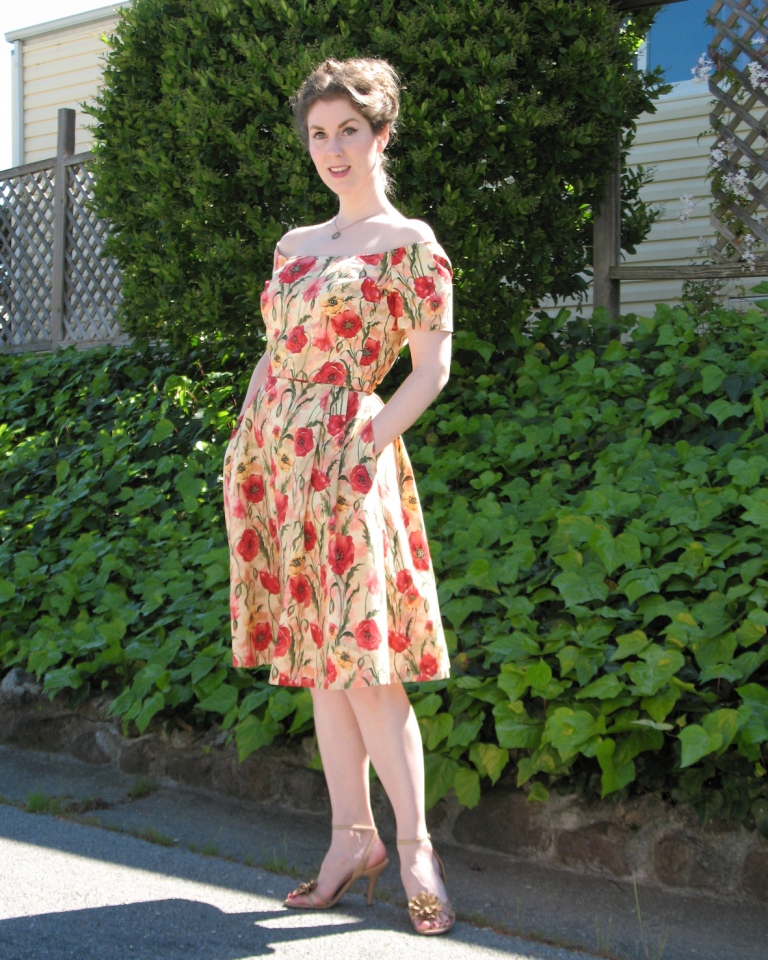
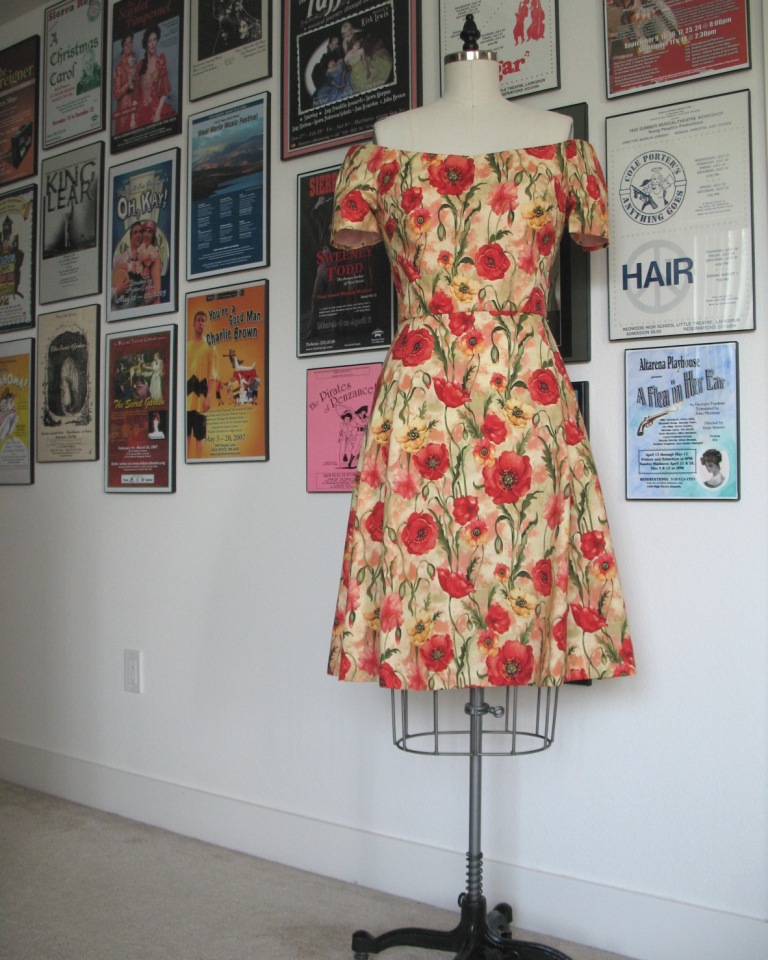
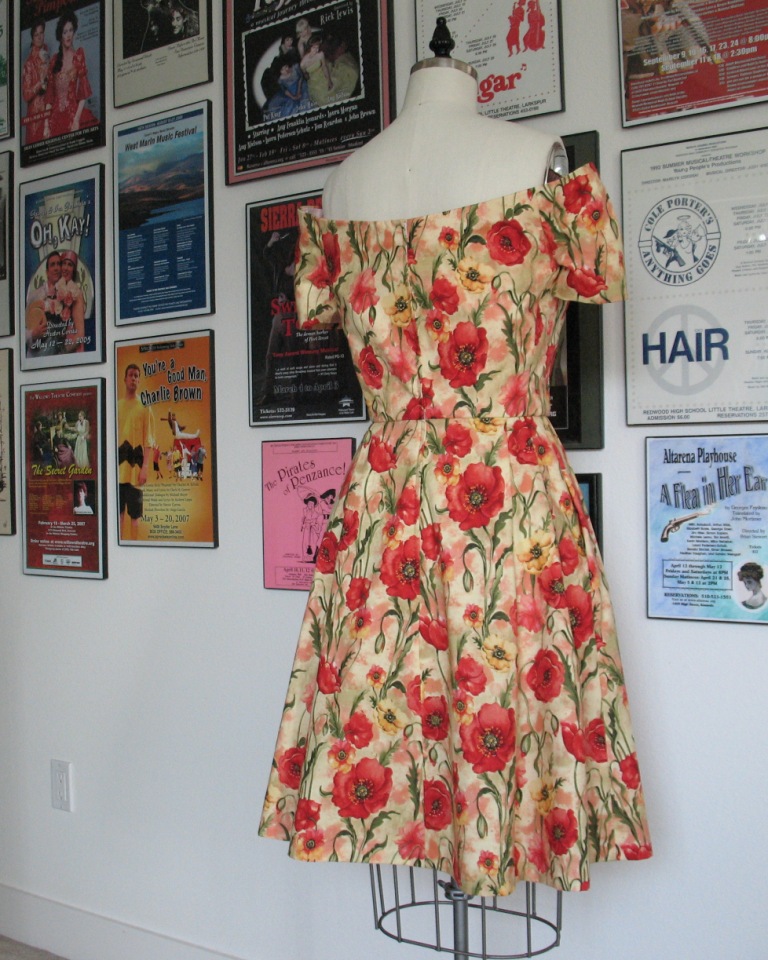
Last week's weather was perfect for cotton summer dresses.  And I had just the thing to wear - my new poppy print dress!


The bodice came out a bit roomier than I was expecting (the pattern envelope should have been my first clue).  But it is quite comfortable to wear, so I am going to leave it as-is.


The elastic pieces in the sleeves and the waist-stay make the dress stay in place which is the most important thing!  There is always a fine line for off-the-shoulder dresses . . . too tight at the neckline and you can't move your arms, too loose and the thing falls down to your waist.


I left the pleats soft, instead of ironing them down the entire length of the skirt as the pattern suggests, which I felt would be too severe for this print.


And yes, the design includes pockets, which is probably a huge selling point for many people.  


They are wonderful for taking photos, but other than that, I rarely find a use for them in lightweight frocks.  Anything of significant weight placed in the pocket is going to pull the skirt out of shape, which is not a good look.


If I make this dress again, I would eliminate them to save on fabric.  I have been wearing dresses for many, many years now, and should know that I will never end up using dress pockets.  Or maybe I should stop carrying so much stuff around so they would actually be useful!  


With or without pockets, I am going to call this dress a success!


Dress:  Made by me, Butterick 6129
Shoes:  Jennifer Moore

Friday, March 27, 2015

Print Obsessed


As soon as I saw this pattern, I knew I wanted to add it to my collection.  


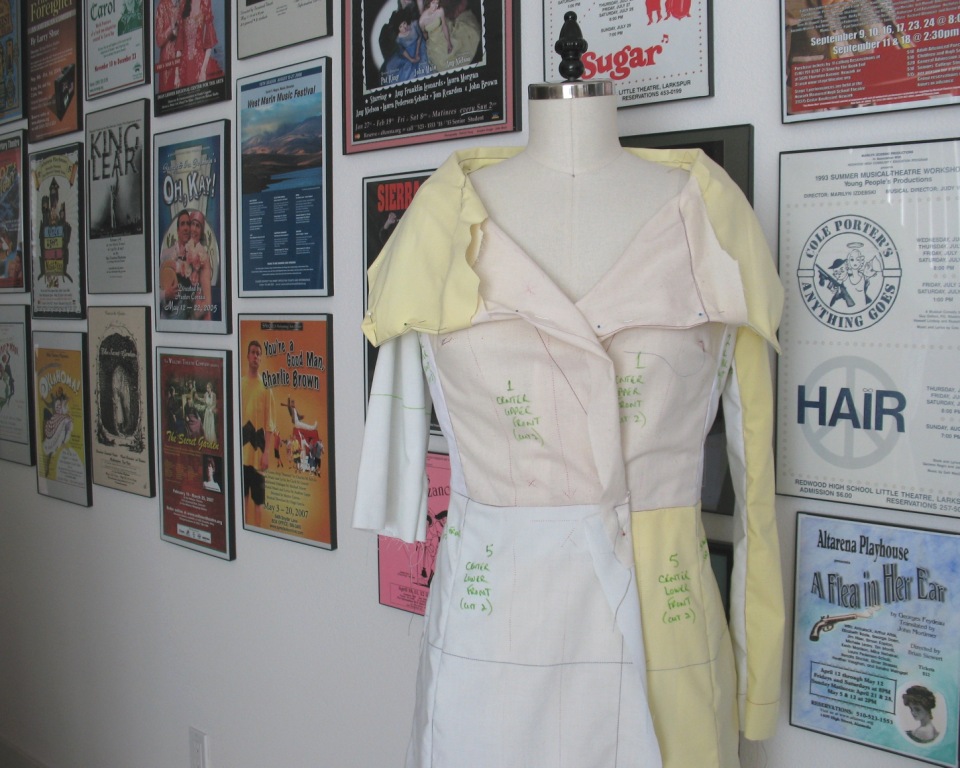
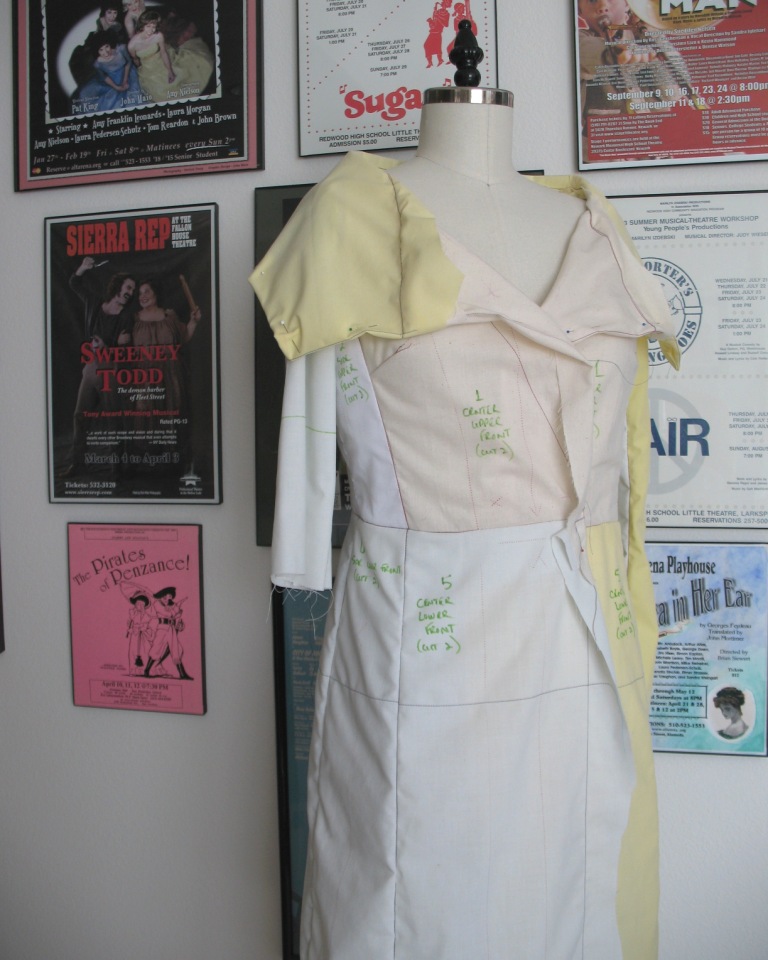
Of course, the weather was still a bit cold for a summer dress.  So I planned to make a modified version using the bodice pieces and some wool yardage.  Unfortunately (or rather, fortunately!) the weather turned, and all I had accomplished was a mock up of the bodice.  So there was a change of plans.


This pattern is drafted with multiple views - one is an off-the-shoulder design and the second includes sleeves and a yoke, but the bodice pieces remain the same.  The thing is, a strapless or off-the-shoulder dress bodice should be treated differently than one with sleeves that hang from the shoulders.


I ended up using the sleeves from the yoked version, and eliminated the yoke pieces.  A covered length of elastic keeps the sleeves in place.  The strapless version includes instruction for  ¼” elastic, but I substituted ¾” elastic and ended up shortening the elastic guide provided by approximately 1.5”.


I also added a few pieces of boning.  I suppose I could have fused some interfacing to all of the bodice pieces (this is mentioned in the directions), but that would make the dress rather stiff.  Instead, the boning keeps the back bodice from collapsing.  The neckline was also stayed with a length of seam binding.


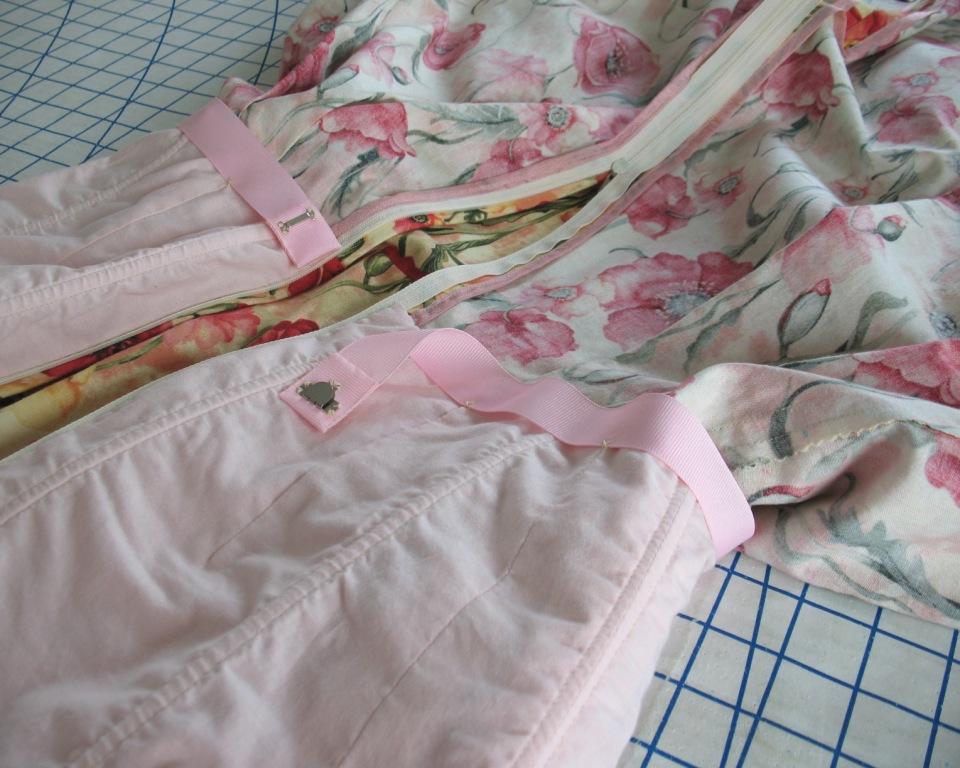
A waist stay was added to the waistline.  And I just realized I am going to have to add a couple of ribbon hangers before I can call this dress finished!  But I am so, so close!


Monday, March 23, 2015

Change of Plans


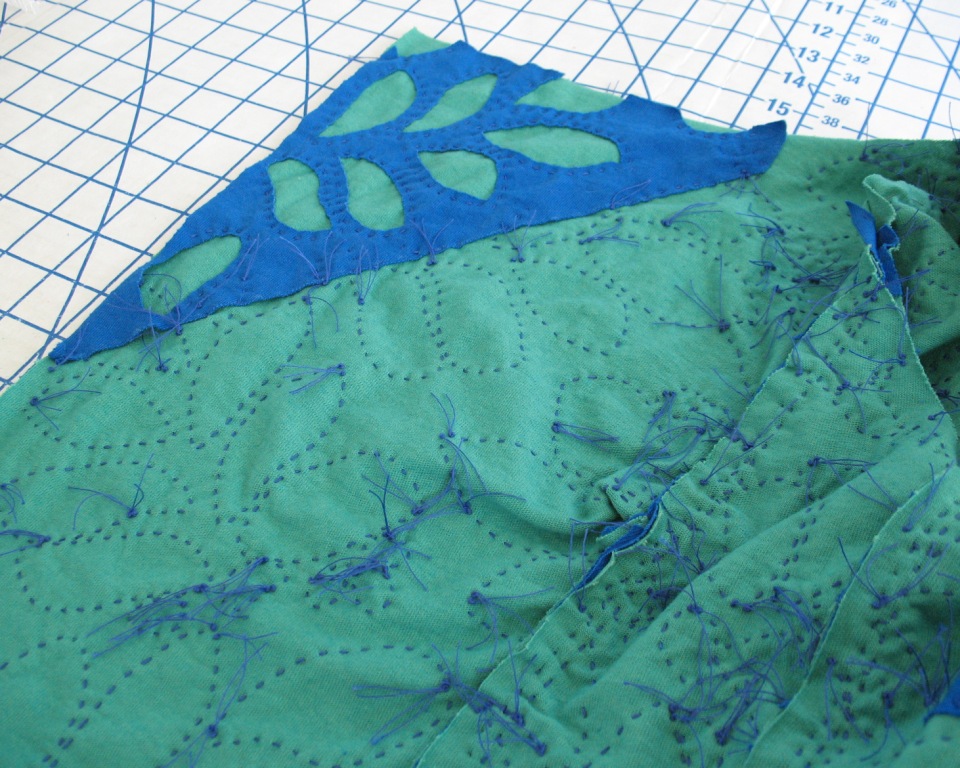
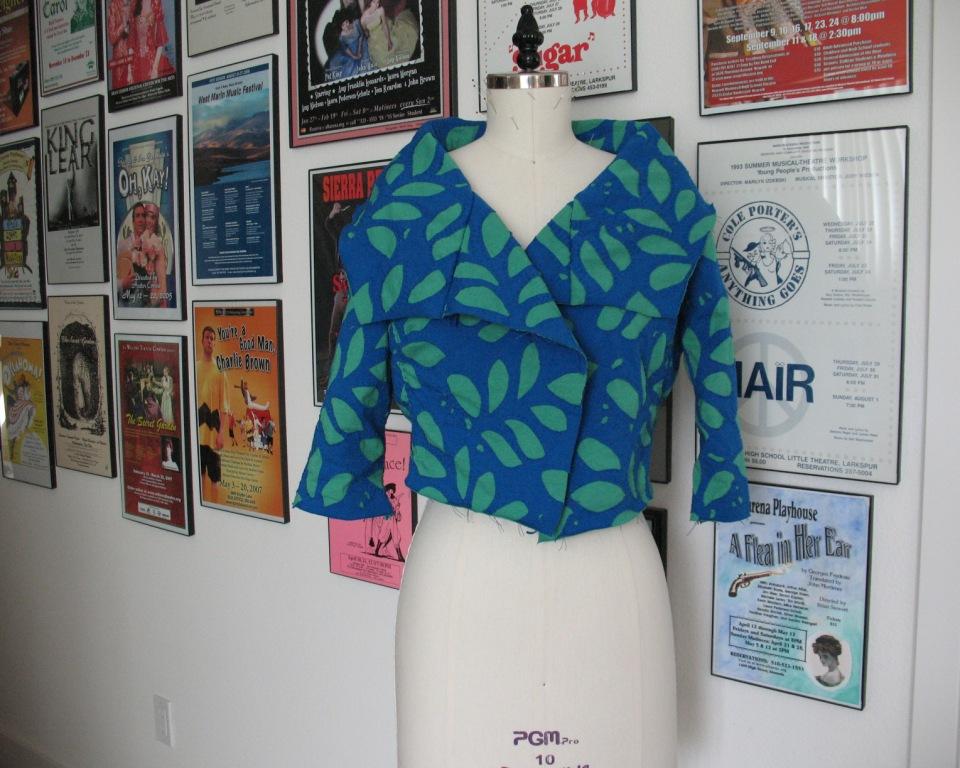
My Alabama Chanin adventures continue . . .


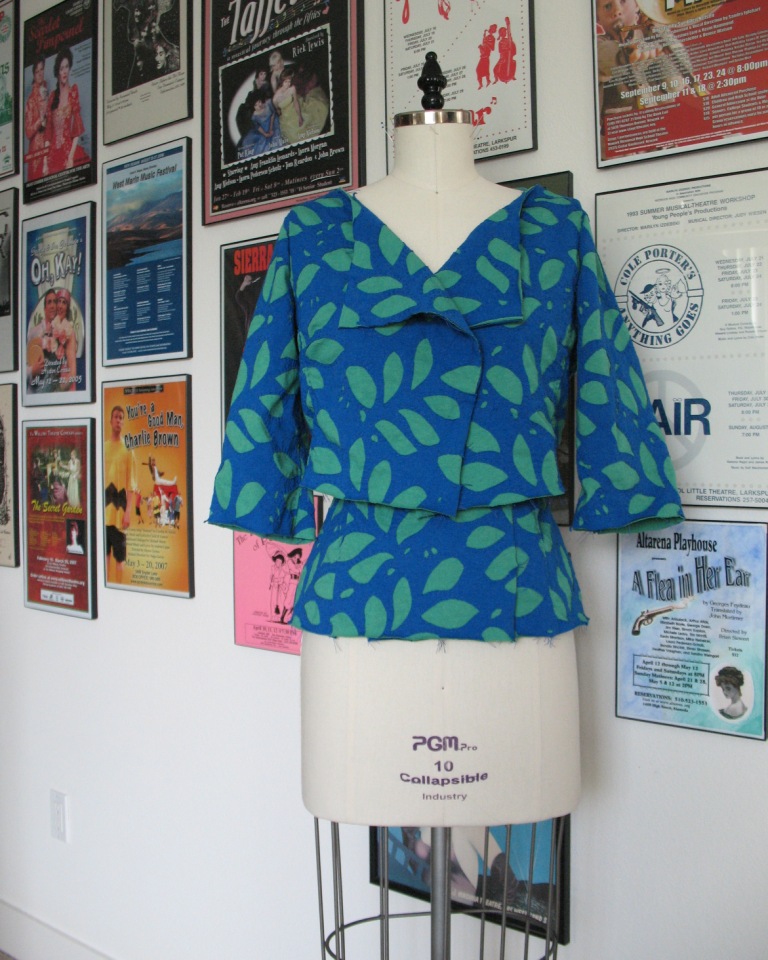
I have a pink wool coating that I keep meaning to put to use.  The pattern changes from year to year, but this time around it was the BurdaStyle Shawl Collar Fit and Flare Coat.  I loved the design as soon as I saw it, and when Beth mentioned the very same pattern at a get together last year, I purchased a copy for myself.


I began working on a muslin, but the fit was not going to be right for the thick wool fabric, and I put it aside and was soon distracted by other projects and fabrics.  By the time I picked it up again, the weather made working with wool rather ridiculous.  Whoops.  There goes another winter season with no new coat.


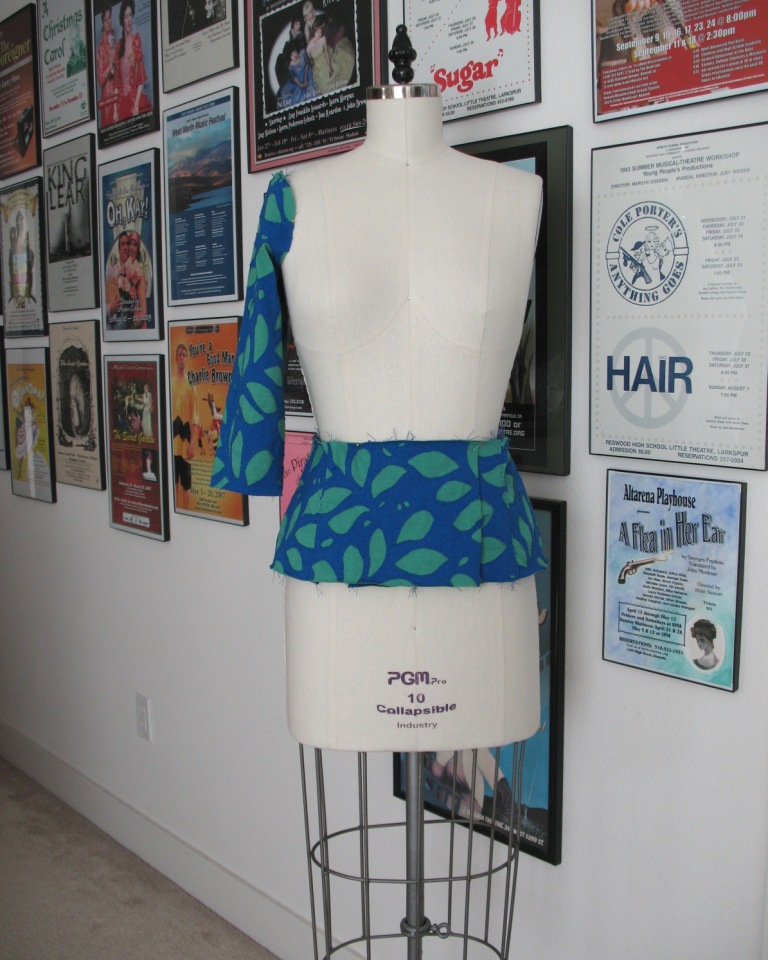
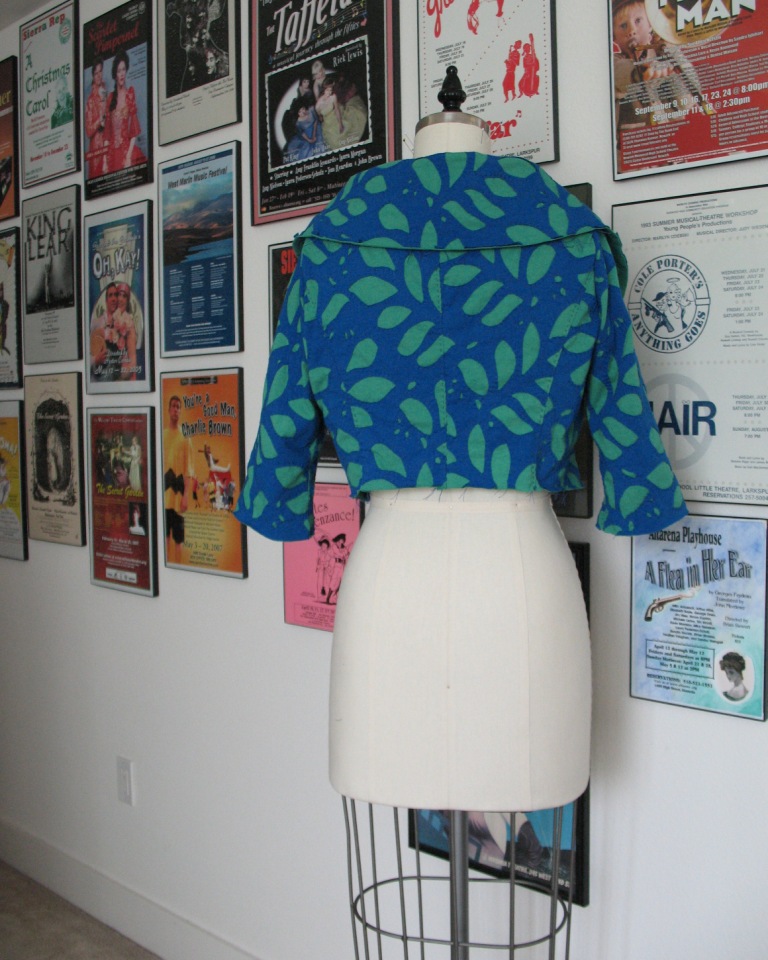
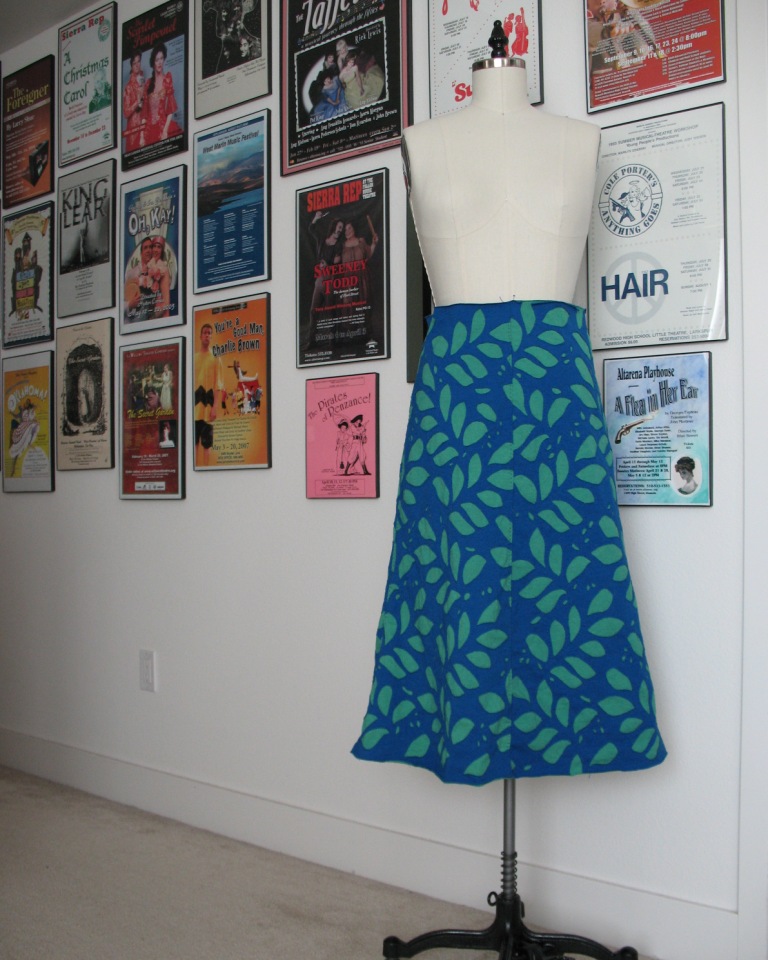
But I did need a matching garment for my Alabama Chanin skirt, and this seemed like a possibility.  So I swapped out a single piece sleeve for the original, and got to work.


My main issue with the jacket construction what to do with the section of bodice front that is turned and becomes part of the collar.  I did not want the green side of the work to be visible for such a small portion of the piece because I was afraid it would look like a mistake.


I ended up adding an extra layer of blue jersey to the folded section.


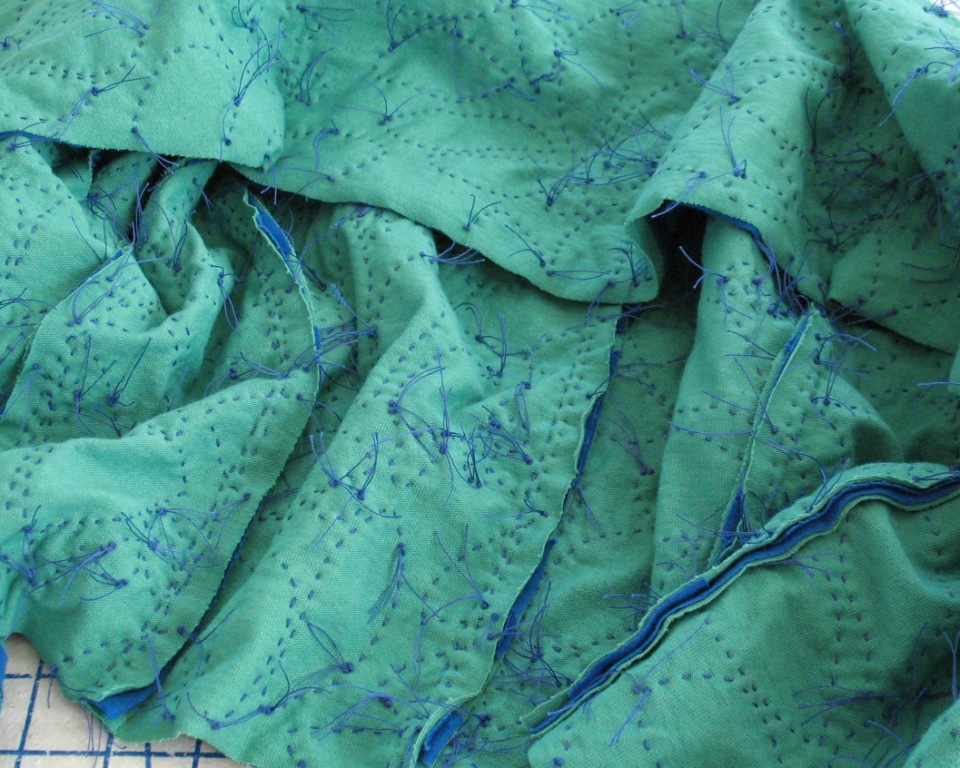
My least favorite part of this process is the second line of stitching necessary to complete the felled seamlines.  There is a fair amount of bulk to contend with, which is not nearly as much fun as the appliqué.  But I do love the way it looks, so I am sticking with it!


And eventually, I will have a brand new outfit!


Friday, March 20, 2015

The Cost of Hand Sewing

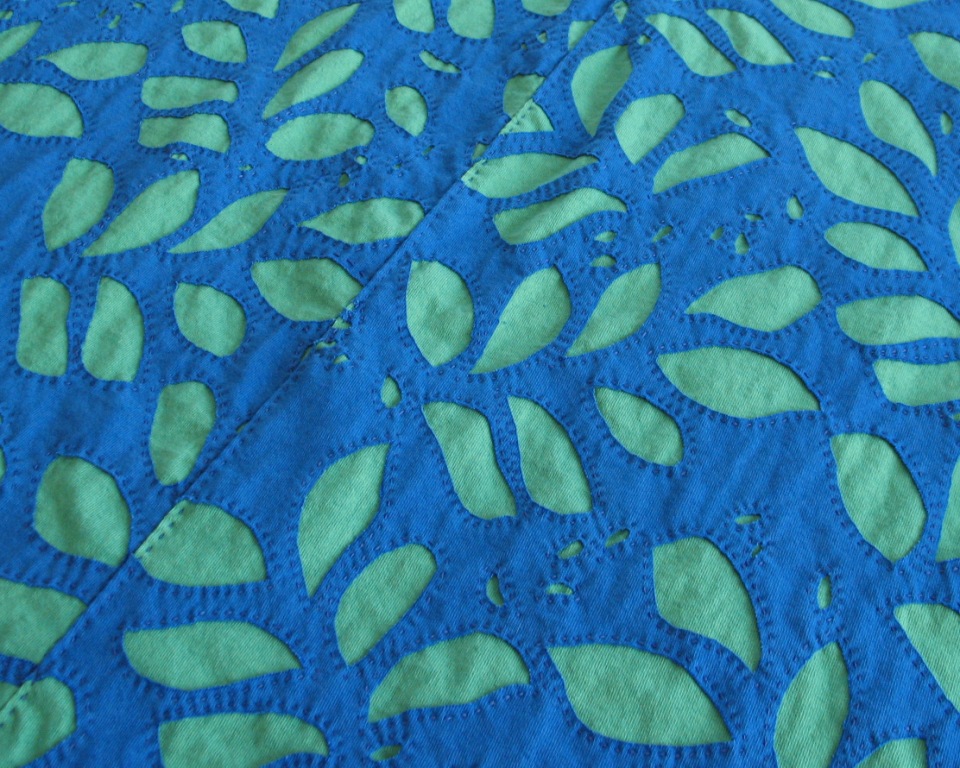
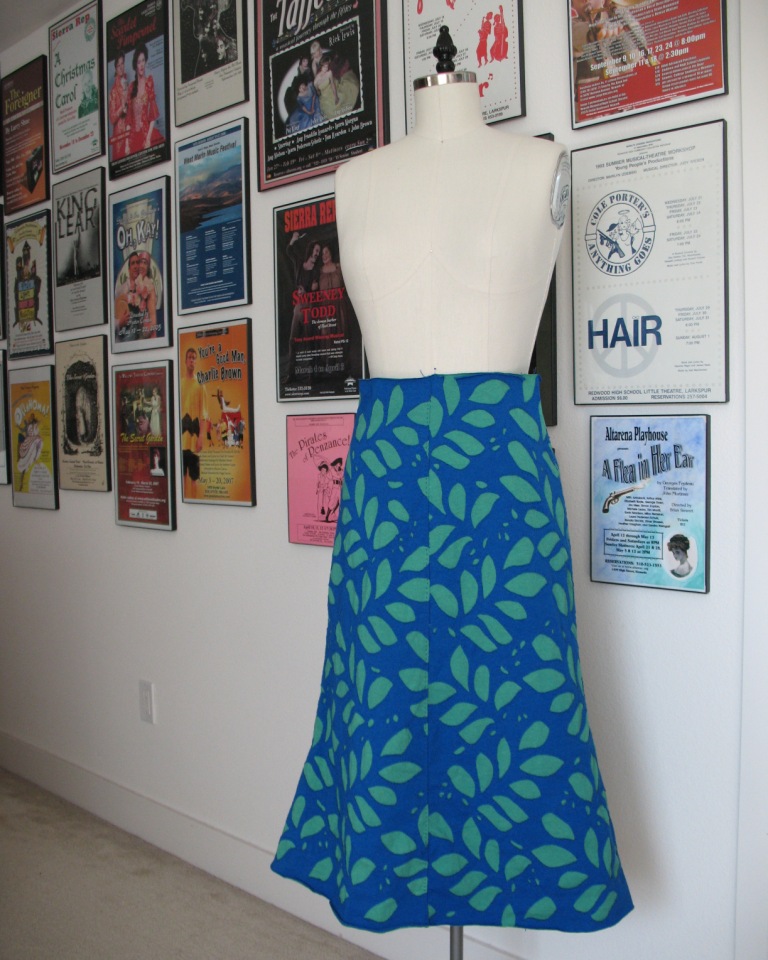
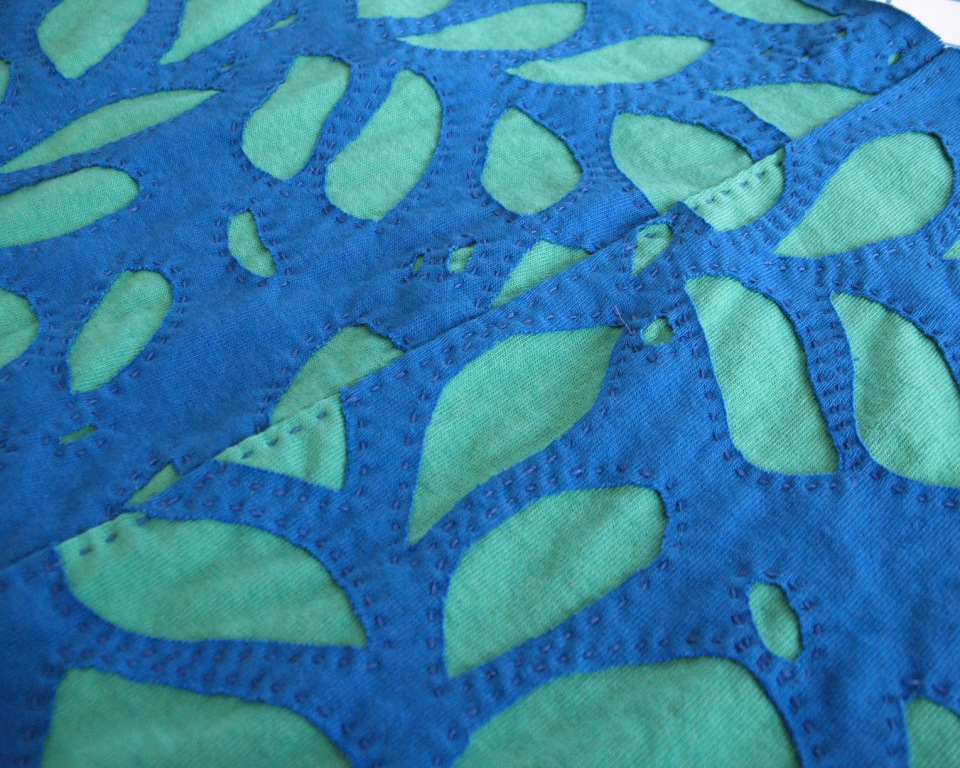
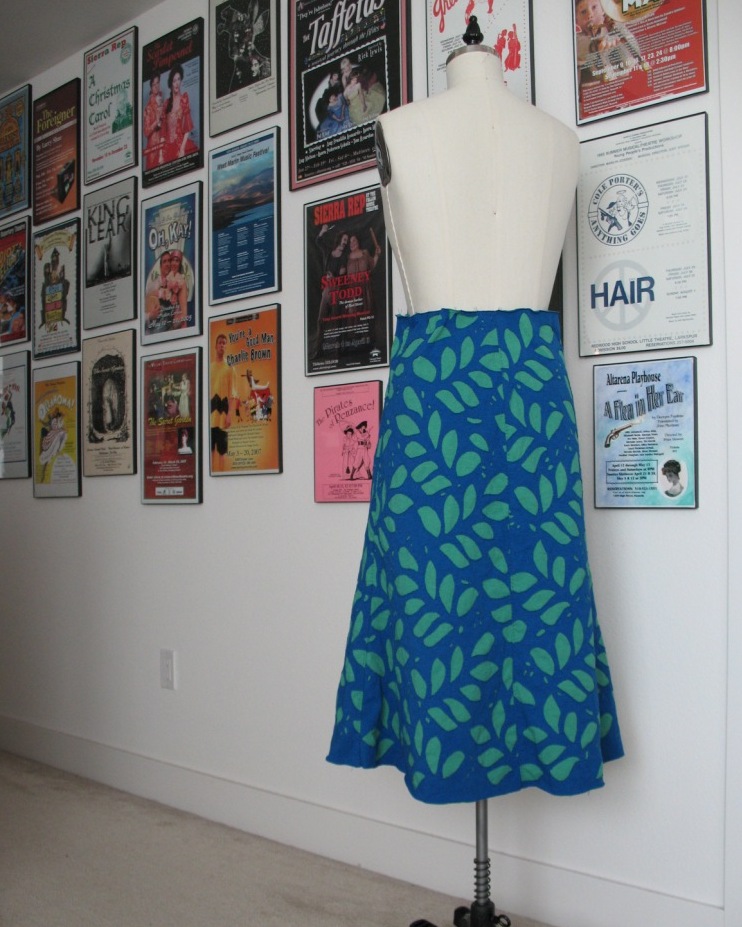
I am still working away on my Alabama Chanin outfit.  Most days, this is the project that I am drawn to.  I find hand sewing to be very relaxing, and the cotton jersey seems to be extra kind to my fingertips.  I have no needle wounds on the pads of my fingers, even with daily sewing.  The skirt is finished, except for the waistband.  I did find a fold-over elastic that is a decent match to the sapphire blue cotton . . . now I just have to decided if I want to replicate the waistband of my first attempt, or go for the elastic.


I have also been contemplating Over-dressed: The Shockingly High Cost of Cheap Fashion

I confess, I had a hard time reading large chunks of this book at a single sitting.  Normally, I devour books, but the subject matter was so disheartening to me, I could not manage to read more than one chapter at a time.  I finished reading it weeks ago, but I have yet to return the book to the library.  I feel very unsettled, and keep hoping to find some answer if I stare at the cover long enough.

What is clear is that ethical clothing made by workers earning a living (not minimum) wage is expensive.  Too expensive for anything except a niche market, catering to those who not only have the funds, but appreciate the effort and skill that goes into making them.  Throwing a designer name into the mix will certainly sell garments, but just because a Dior or Chanel tag is stitched to the back of a skirt does not make it haute couture, or even high quality.  So many consumers seem to be more interested in who they are wearing than what they are wearing these days.  What’s in a name?  I am much more interested in quality.  Which probably explains why I enjoy making my own clothing.

So I thought I would play a game with myself and try to figure out what this skirt I have made might actually cost in a shop . . . or rather, what it should cost. 

Alabama Chanin garments are sourced and made in the United States, are extremely labor intensive, the company compensates their artists with a living wage, and seemed like an interesting choice for this exercise.  I am also knocking off their skirt, so it was a rather obvious place to start!


My skirt requires approximately 3 yards of cotton, dye, a whole lot of heavy duty thread, a stencil, and many, many hours of labor.  Alabama Chanin has fabric, a means of dying their fabric so it is certainly more cost effective than their $26/yard price tag, thread, stencils, and a method of spraying the design directly on cotton a lot more efficiently than me.

I am not finding an exact match to my 31” long reverse appliquéd skirt for sale, but similarly embellished pieces are available on their site from $2,500 - $3,000.  That sounds like a lot of money for a cotton skirt, right?! 


If we say that a mid-length skirt will require approximately three yards of fabric and four spools of thread, Alabama Chanin sells these items for around $80.  That cost obviously factors in a profit, so I am going to guess the actual cost is around $20 or $30.  I am going to ignore the cost of the stencil.  So, if we are talking about a $2,000 garment, the supply cost seems rather negligible.  Clearly, the main cost is the skilled labor (as it should be!).

I started work on my skirt in early January.  Dying the fabric took most of a day.  Tracing my pattern pieces and cutting the fabric also took a chunk of time.  Making and cutting my stencil also adds a few hours to the total.  This process is obvious more streamlined for a company that is set up for it – I started from scratch, and am at the beginning of the learning curve. 


I was not keeping track of my sewing time, but for most of January I spent at least one hour a day with a needle in hand for this project.  Some days I spent considerably more time, and some days I had other things that took precedence and did not pick up the project at all.  I also made a few test swatches for myself to make sure I liked the result which added to my time.  So let’s call it forty hours, just for laughs.    

In California (where I live), minimum wage is $9/hour.  I am confident a “living wage” in Alabama is significantly higher than the mandated $7.25/hour minimum wage.  If I more than double that number and pay myself $15/hour for my 40 hours, that means I would be paid $600 for the piece.  Then, the $30 supply cost needs to be added.  That brings the total up to $630 with no profit of any kind.  If we multiply by four, that gets us to $2,520 – right around the cost of an original Alabama Chanin skirt. 

Most people would never dream of paying $2,000 for a cotton skirt, even if they could afford it.  But once you have created a well made or highly embellished garment that takes thirty or forty hours to produce, that number begins to sound reasonable. 

Much of this process, of course, would be more time efficient in the Alabama Chanin Factory.  I wish I knew how quickly one of the real Alabama Chanin skirts are stitched together.  But I simply cannot imagine that from start to finish, the highly embellished versions could take less than twenty or thirty hours of time.

I am not at all familiar with the way MSRP is calculated.  However, I am very familiar with the sale price insanity that pervades the U.S. retail industry, which so many of us have come to expect.  Every day I receive email notices of 25, 30, sometimes even 50% off retail prices.  With all of those 50% off sales, it is not hard to believe that manufacturers are selling their wares at four times the rate of cost to the manufacturer, or a 200% markup on top of the manufacturing costs.  I think (or like to think) that Alabama Chanin is paying more to their skilled workers, and using less of a mark-up, but I have no way of knowing that.


Personally, I do not consider my time when I make clothing for myself.  I love the process as a creative outlet, and can’t image not sewing.  To me, the "cost" of one of my hand made dresses is the money I spend on patterns, fabric, and notions.  But I would most certainly expect to be compensated for my time if I was to sell one of them.

Most of my new wardrobe pieces are hand-made, and have been for quite a few years now.  It has made me re-evaluate the retail world.  Last year I purchased two Old Navy cotton cardigan sweaters.  The price was low, but I cannot imagine how low the cost of labor must be in order to sell a garment for so little money.  It boggles my mind.  

I know this topic has been discussed ad nauseam.  Unfortunately, the demand for more and more clothing reflecting the latest trends each and every week means companies have an incentive to continue to produce fast fashion.


I doubt the seamstresses and tailors working on those glorious Worth gowns from the turn of the century were making good wages, but instead of fifty t-shirts, they were toiling over a single gown.  That is no longer feasible (and never was for the majority of the population to fill their closets).  Where can we find a balance?  

What would you pay yourself as an hourly wage for your hand work to feel sufficiently compensated?  What do you think is reasonable for a consumer to expect to pay?

It is upsetting that so very few artisans are paid according to their talent and skills.  Will this ever change?  I have to wonder what the men and women in the haute couture ateliers are currently paid.  

I am not really sure where I am going with this, but I just had to spell it out for myself. 


And as cliché as it sounds, they certainly don’t make things like they used to.  But I can, and will!


[This post is just a theoretical exercise.  I have no way of confirming any of my assumptions, other than the prices listed on the Alabama Chanin website and using a search engine to find out the minimum wage in Alabama.  I also think Natalie Chanin understands the fact that many people will never be able to afford her pieces, and I appreciate the fact that she has shared so much of her process through her books and classes.]