Showing posts with label Vogue 2475. Show all posts
Sunday, March 1, 2020
Periwinkle Paired with Shades of Blue
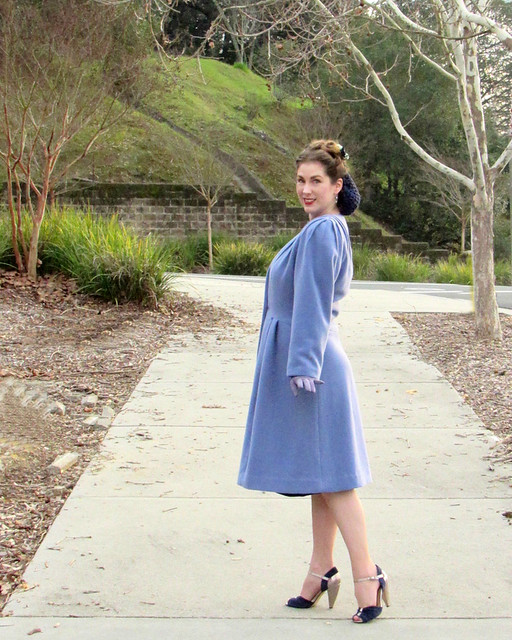
Well, it's March 1st, so this coat should be perfectly weather appropriate. But wait . . . I wore a sundress to work two days ago, so no, February in the Bay Area no longer requires wool outerwear, or so it seems. And although it has cooled down slightly to a high of 60 degrees, I still don't see myself wearing a heavy wool coat anytime soon.
This is one of the projects that I actually completed last year, but never got around to posting photos on the blog.
I had wanted to make a version of this Vintage Vogue reproduction for years. I even started making a pink version probably 10+ years back which turned out to be a questionable fabric choice, and I just didn't have the heart to finish it.
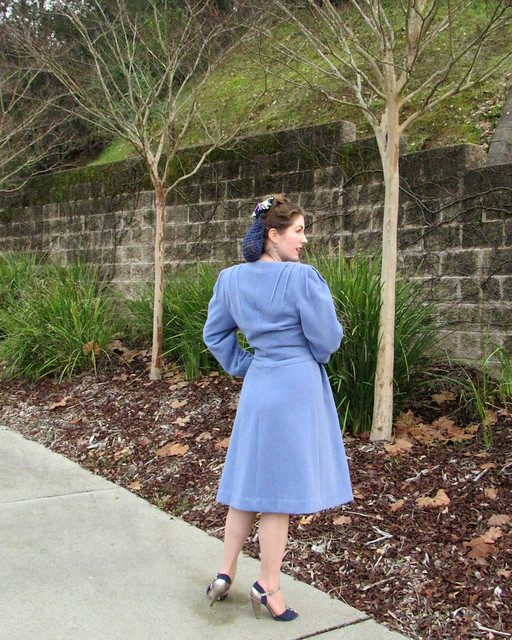
And then this periwinkle colored wool showed up in my life. It is also probably not the perfect choice for this garment (it could use a little more drape and maybe a little less weight), but I do love it.
I have a habit of making coats that don't match a whole lot of clothing options in my wardrobe, and just when I was afraid that this would become yet another, I remembered this 1940s reproduction that I made back in 2010.
Which happens to be a perfect match for my coat.
And it gave me a reason to pull out my favorite snood.
I have stepped away from the 1940s silhouette a bit, but I think I need to revisit the era. Because there are some fabulous silhouettes to be found with amazing details that I look for in my sewing projects.
And now I have the perfect top layer!
Coat: Made by me, Vogue 2475
Dress: Made by me, Hollywood 1449 from Vintage Pattern Lending Library
Snood: Made by me, "Perky Snood"
Gloves: Vintage
Earrings: Vintage reproduction
Shoes: Seychelles "Little Owl"
Saturday, February 23, 2019
Finishing the Periwinkle Coat
Back to this colorful lady . . .
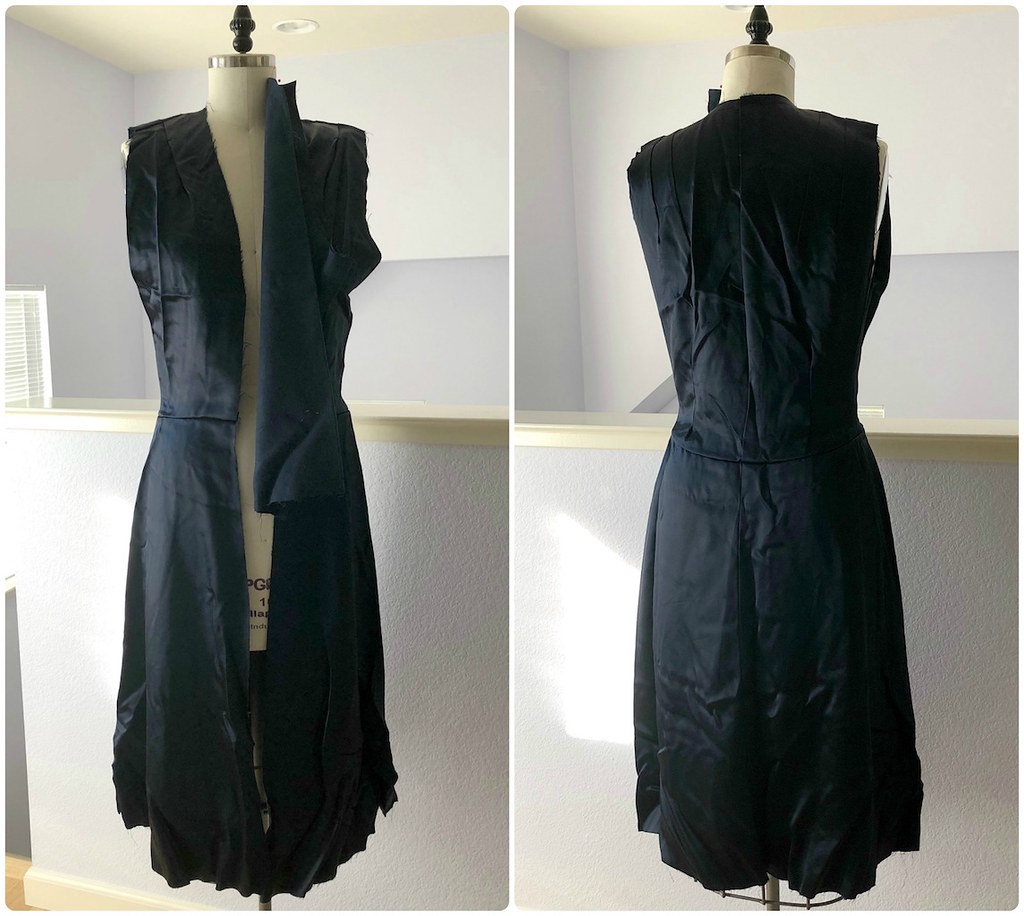
The lining was completed to this point when I pulled the original pink version out of the bag. It's a bit wrinkled, but nothing an iron couldn't fix; which is why I jumped right into the periwinkle wool version. If I had my druthers, I would have picked a slightly brighter blue lining to pair with the lavender toned wool, but I think this works nicely. And it's certainly preferable to being scrunched up and left unfinished in a plastic bag!
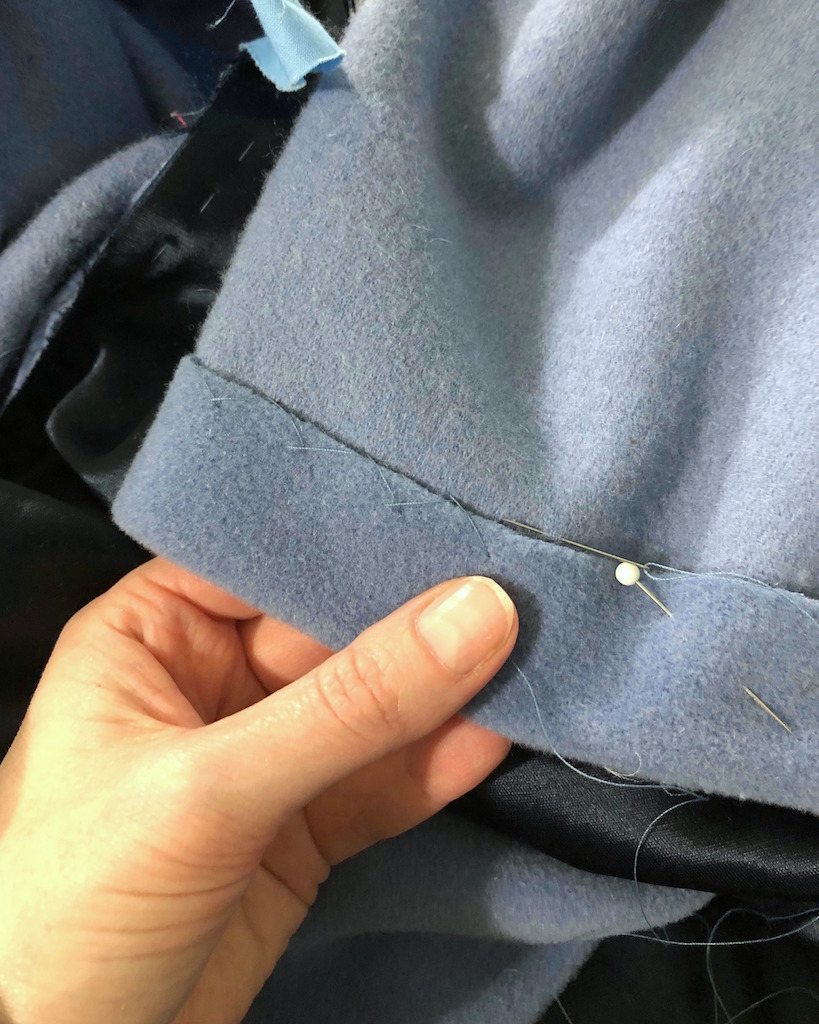
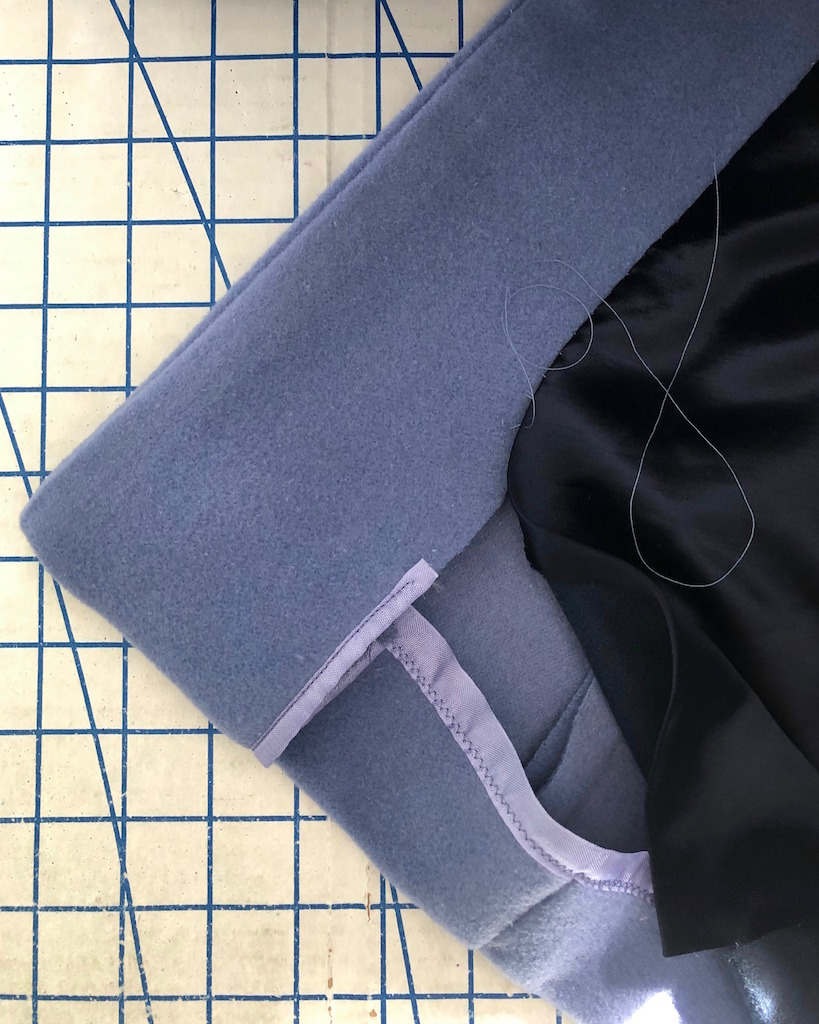
So, to continue with the sewing . . . the sleeve hem was catch-stitched in place on the wool coat.
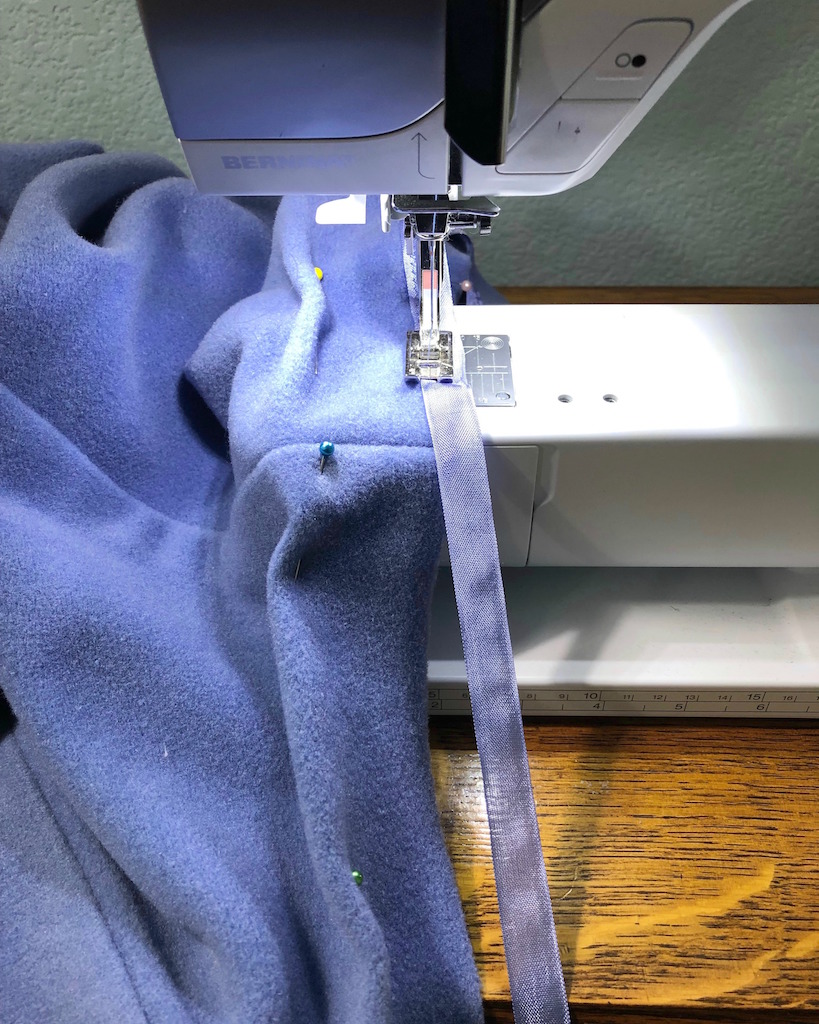
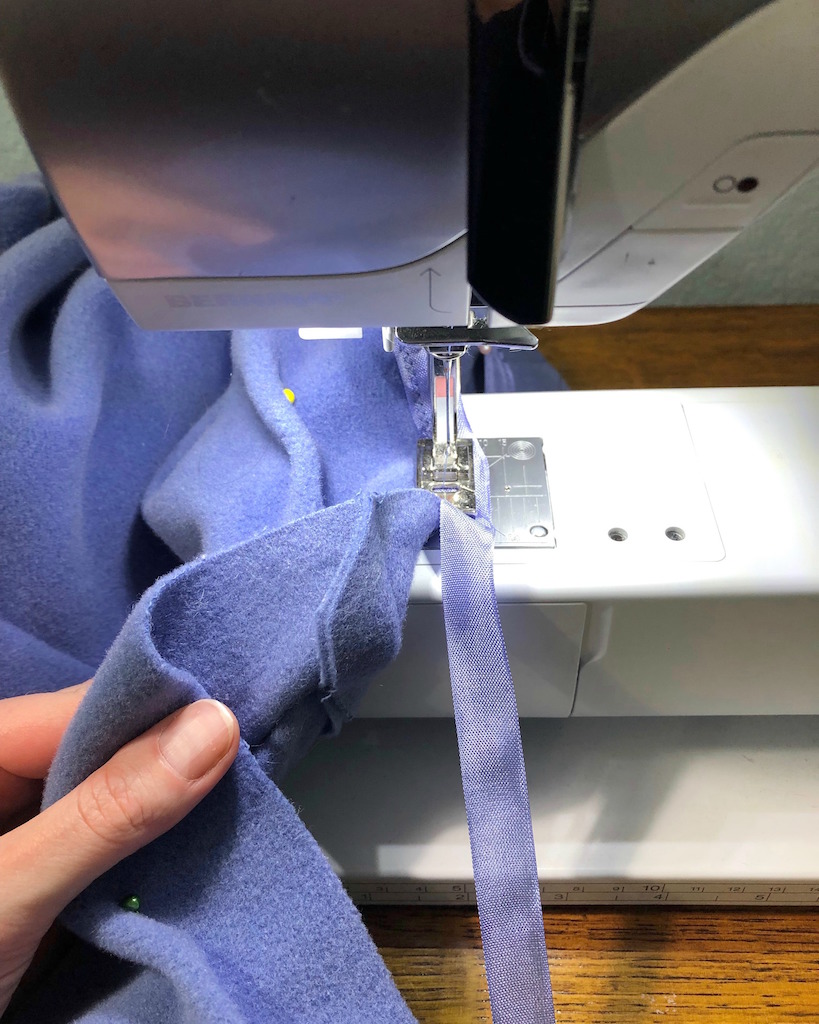
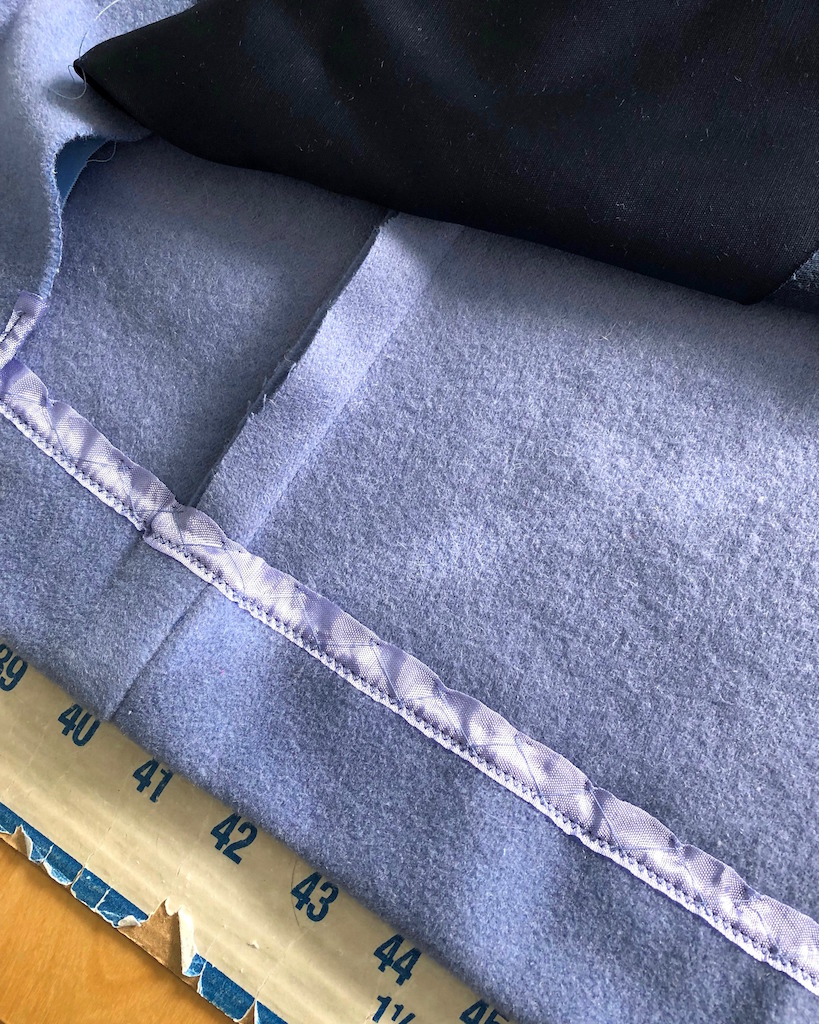
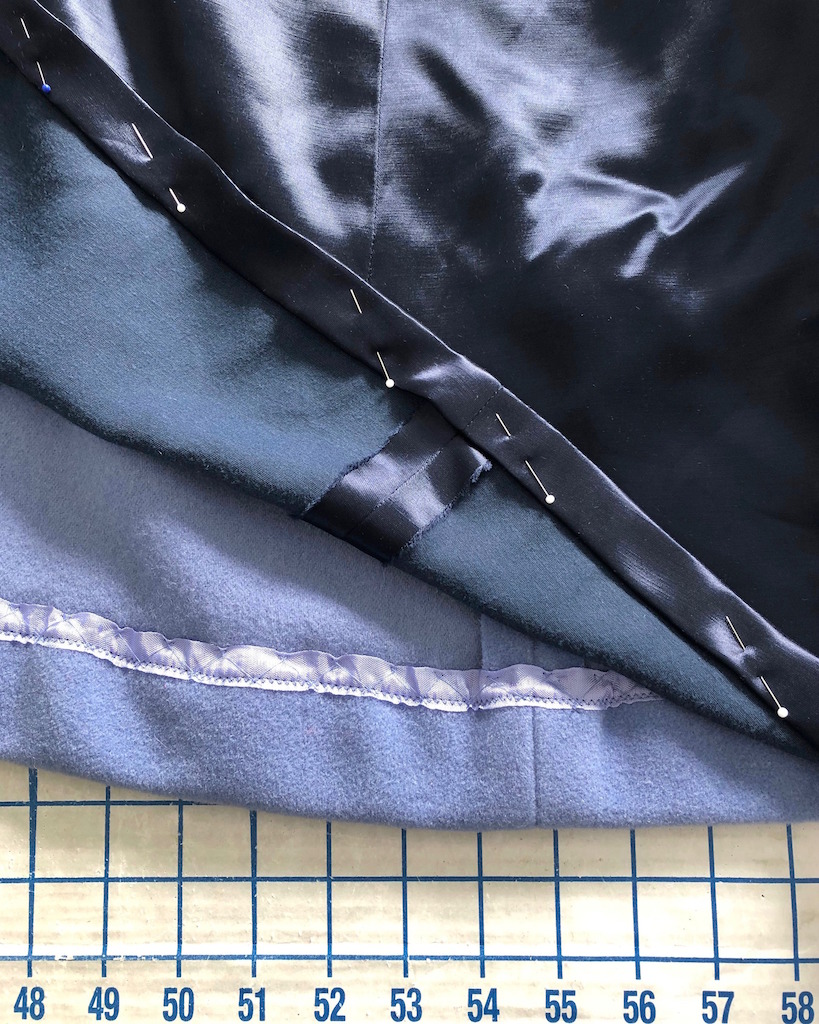
I used my beloved seam binding as hem tape for the skirt hem.
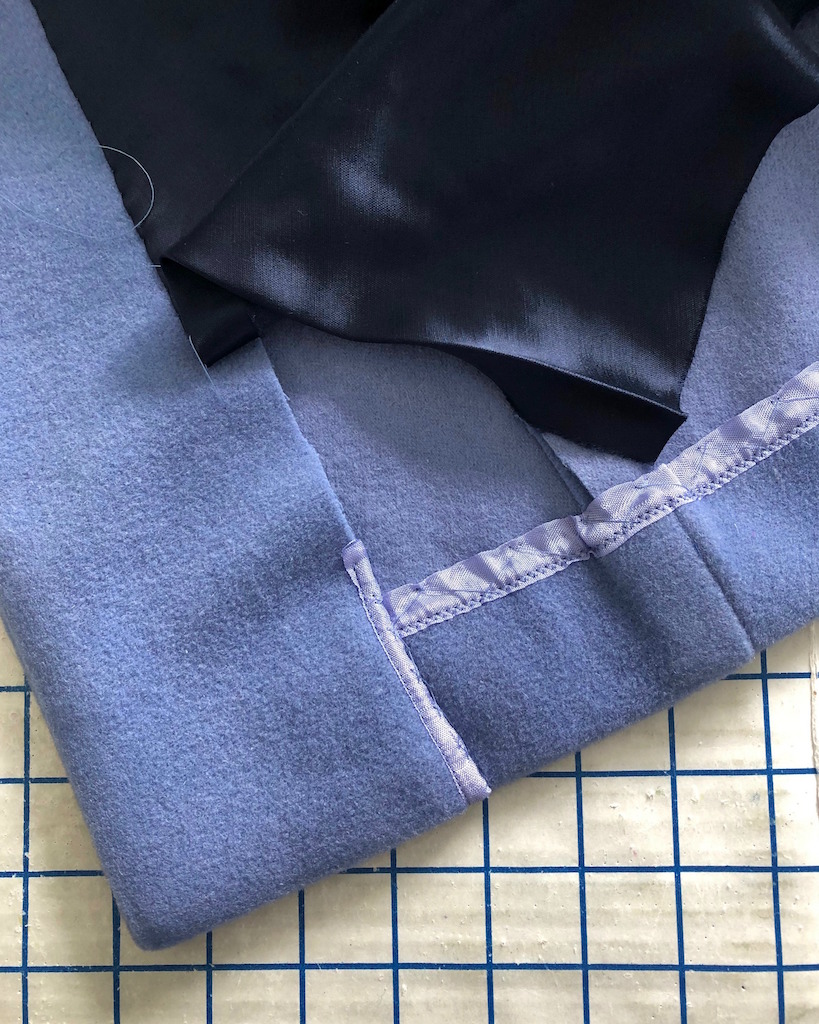
To avoid bulk at the seamline, I clipped diagonally. This particular wool is not prone to raveling, but since the lining hangs free of the hemline, I thought this would be a nice finish.
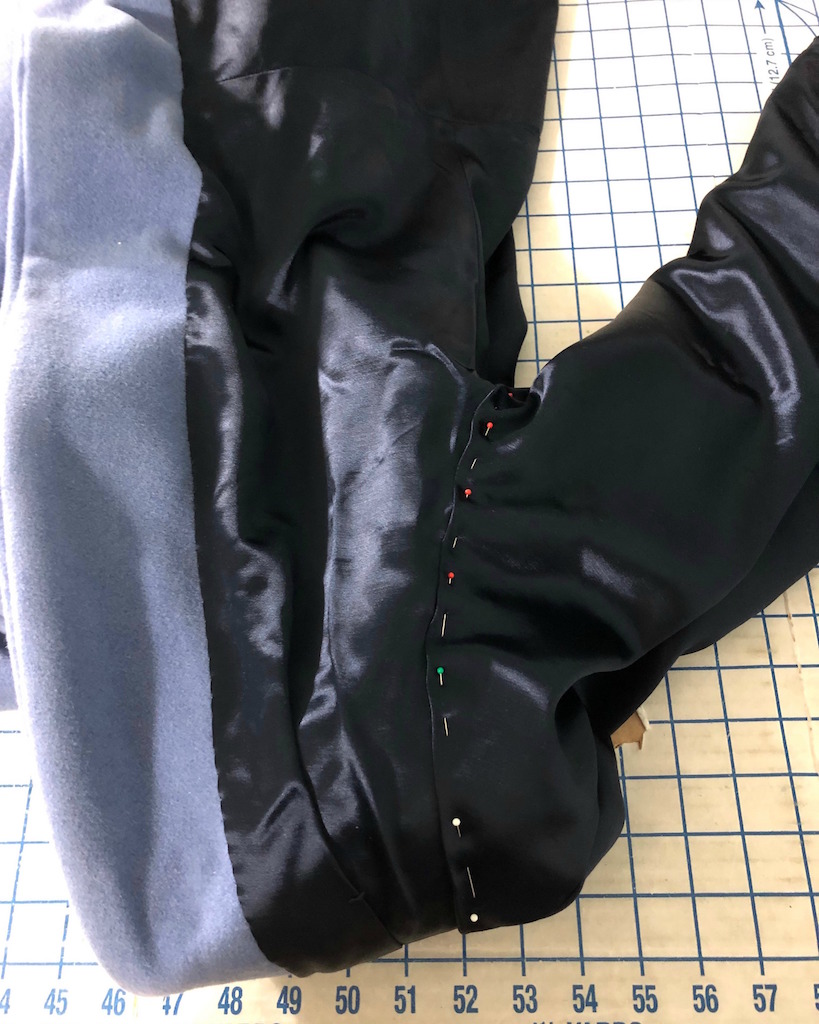
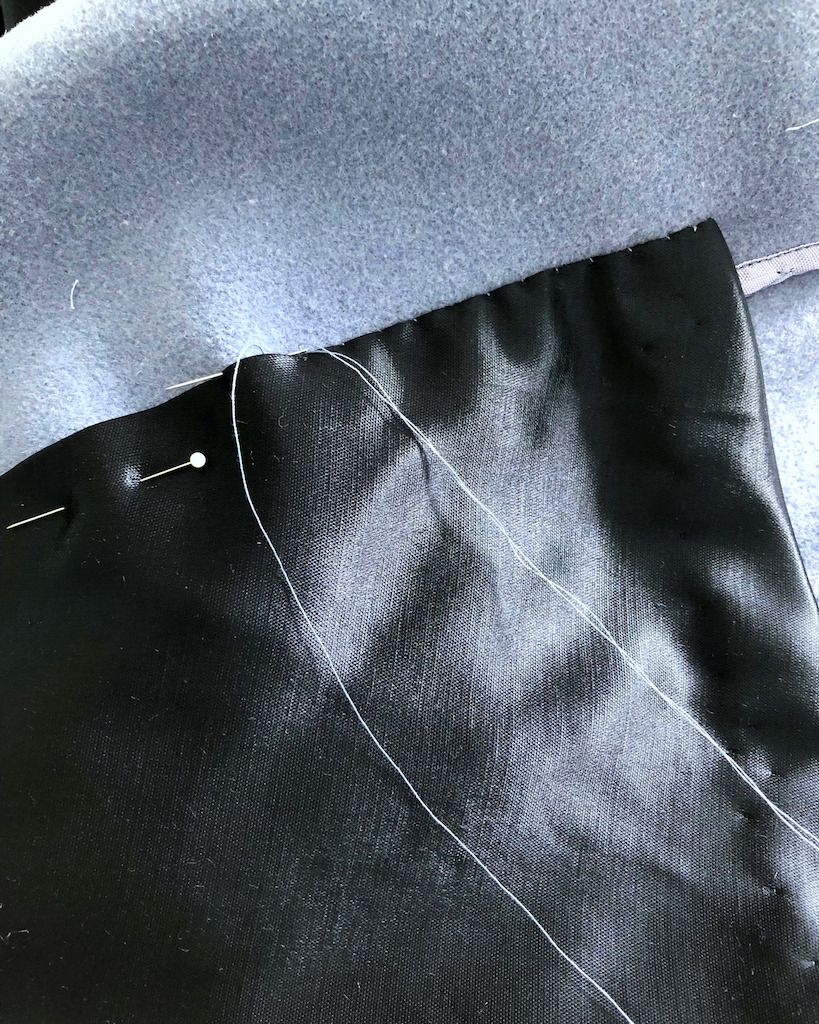
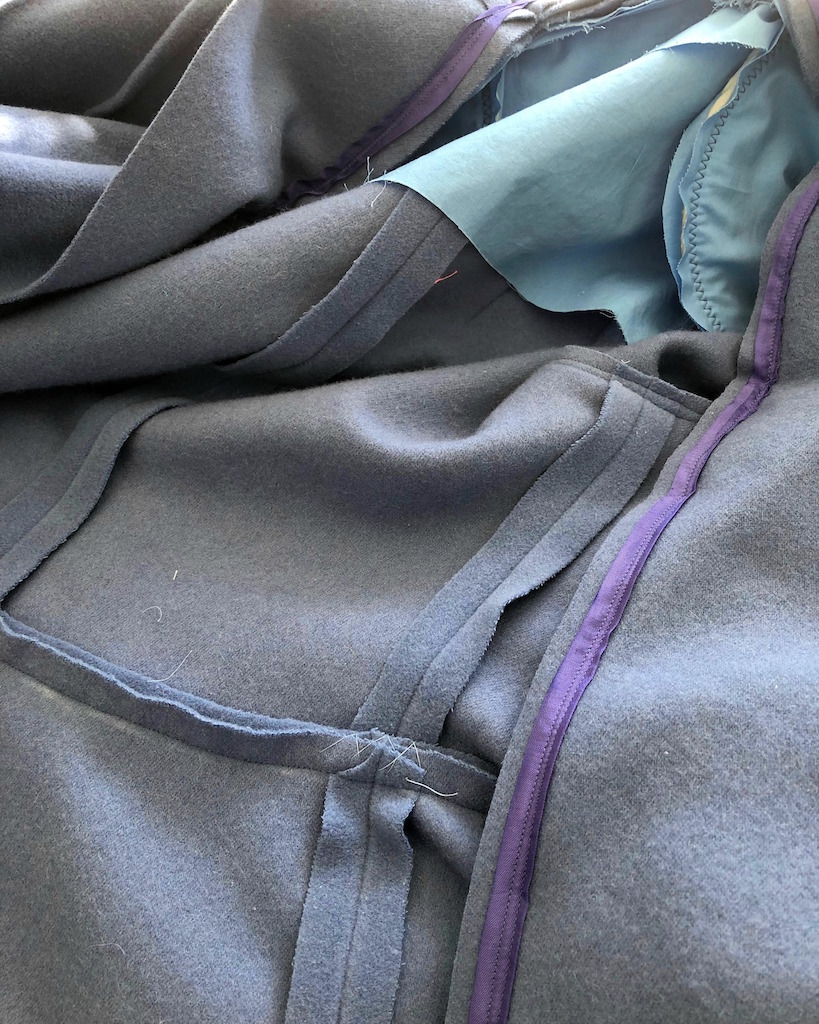
The lining was attached to the shell at the armholes and basted into place. The sleeve lining was then hand stitched to the coat. It's a technique that you often see with vintage coats, and it makes it very easy to remove if the lining ever fails since nothing is machined to the wool.
If you have ever come across a vintage coat, it is likely that the lining fabric has shattered if it is silk, or may have sustained damage over the course of its life. The coat itself, however, is often in excellent condition. So if all you have are hand stitches to pull out, it is very easy to remove the lining sections and replace, giving new life and adding another forty or fifty years to the life of the coat. Alterations are also easier when you can access the innards with minimal effort.
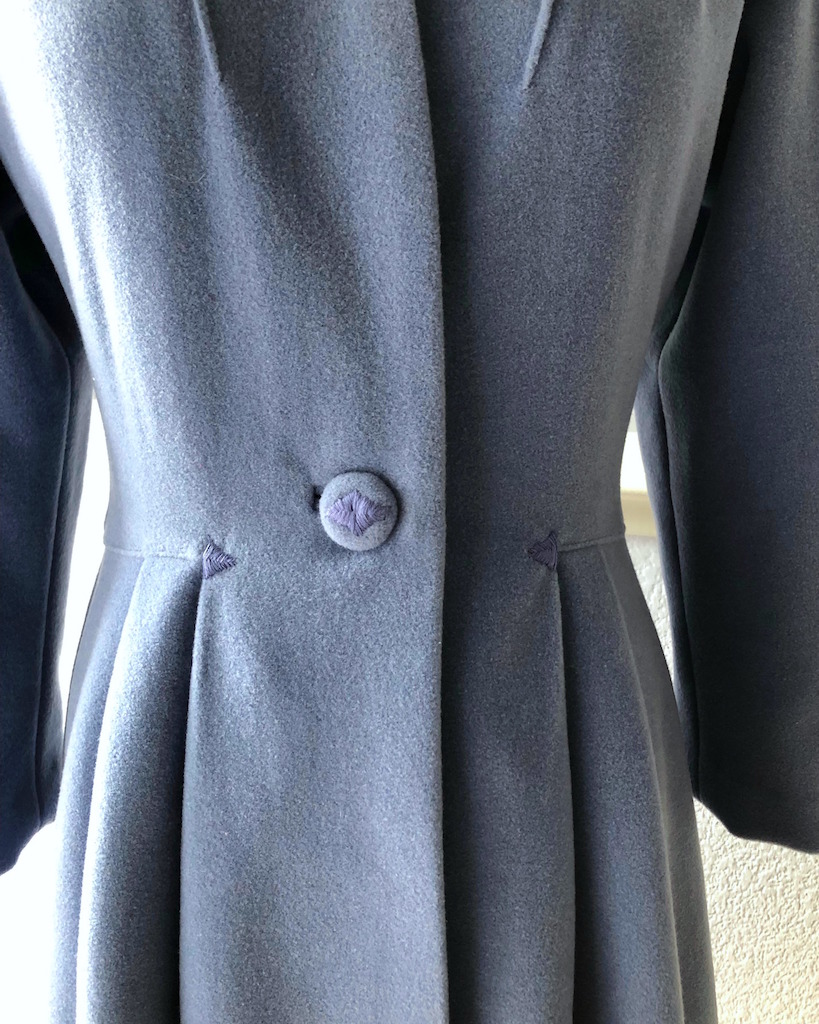
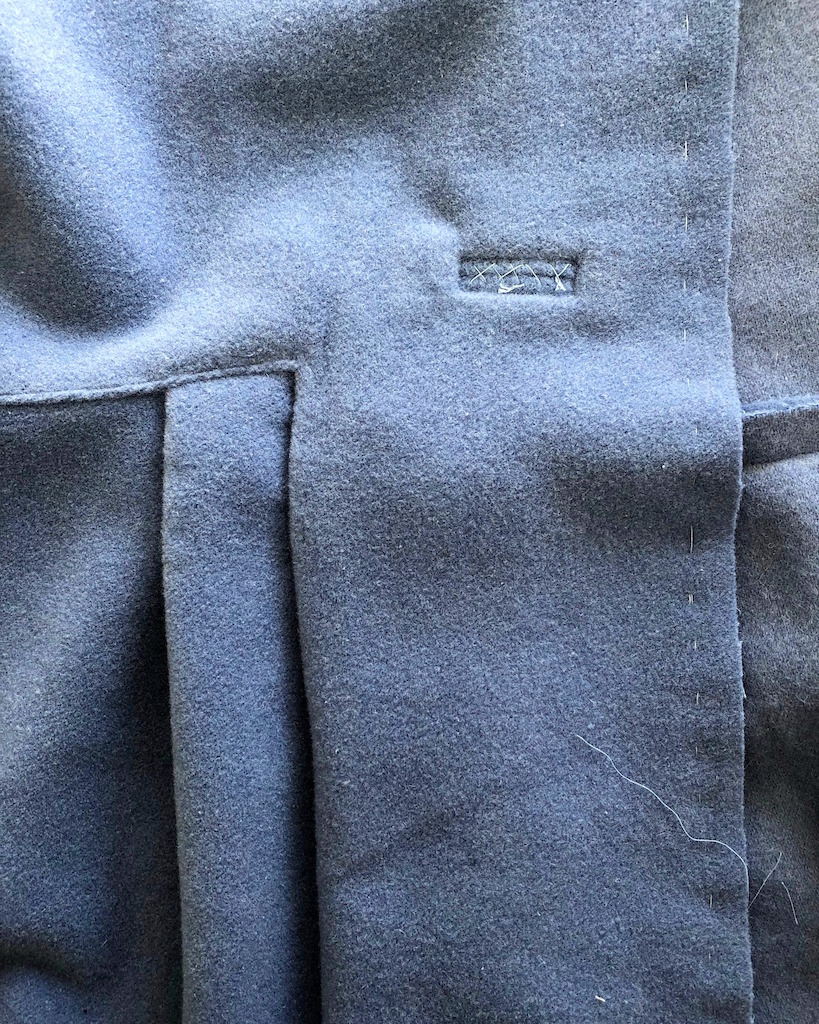
Here is the almost finished bound buttonhole, right next to the arrow tack that covers the waist seam join.
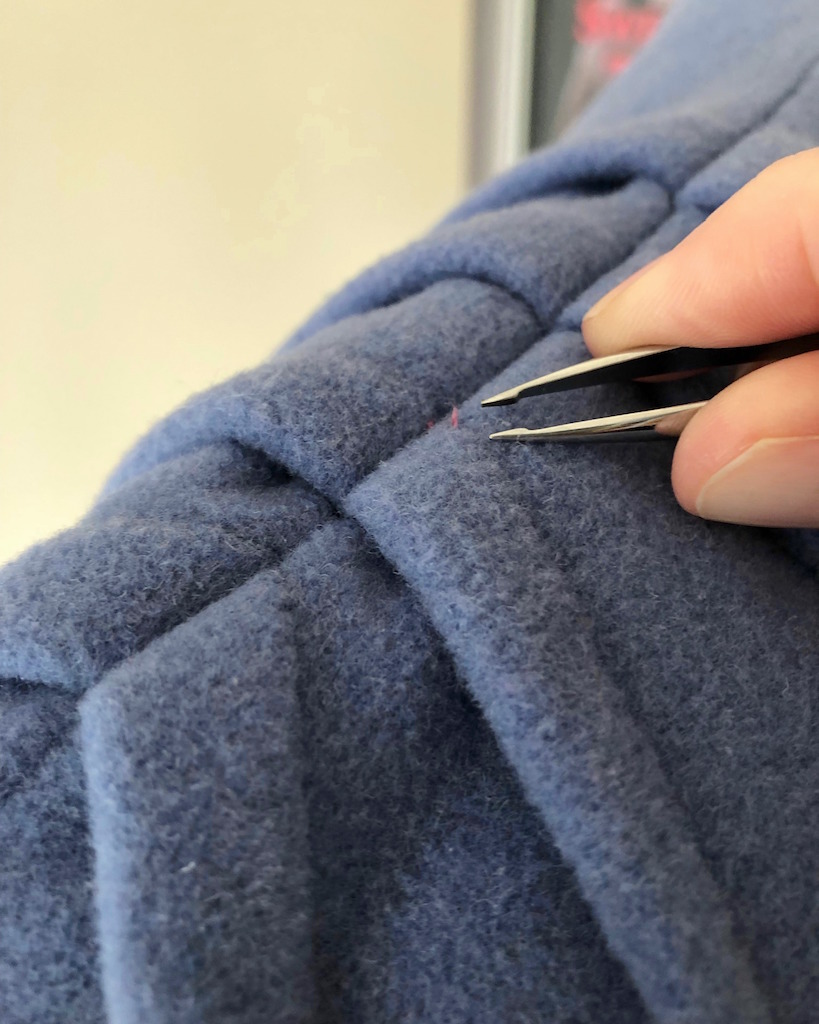
I had a bit of trouble removing some of my basting threads, until I decided to use tweezers - they work great!
I also used seam binding to finish the small portion of raw edged facing that is not covered by lining.
The facing is trimmed before turning it right side out.
Then I get to do a bit more hand sewing. The catch-stitch is becoming one of my favorites!!
And then everything is really close to being finished.
This particular lining is free hanging. Because it isn't all that thick, I decided to fold the lining under twice instead of using seam binding.
Then the lower inches of lining get hand stitched down.
Which covers up the final raw edges of the garments.
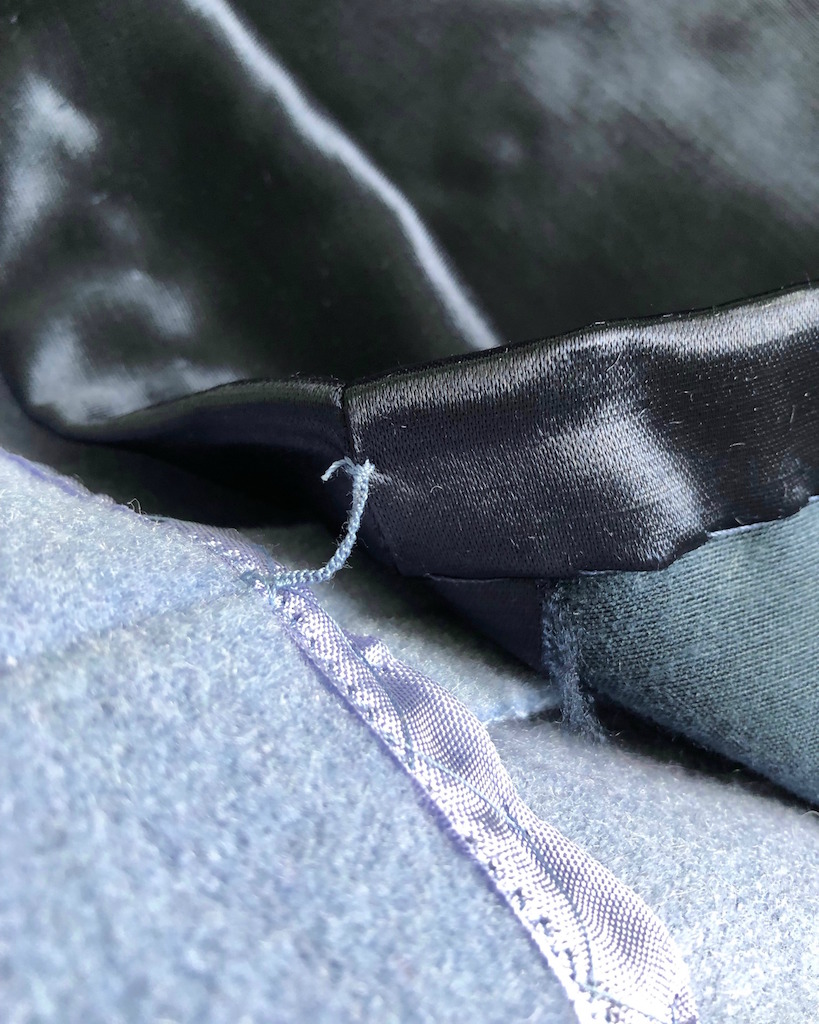
To keep the free handing lining in place while being worn, I made a couple of thread tacks to join the lining to the coat at the seamlines.
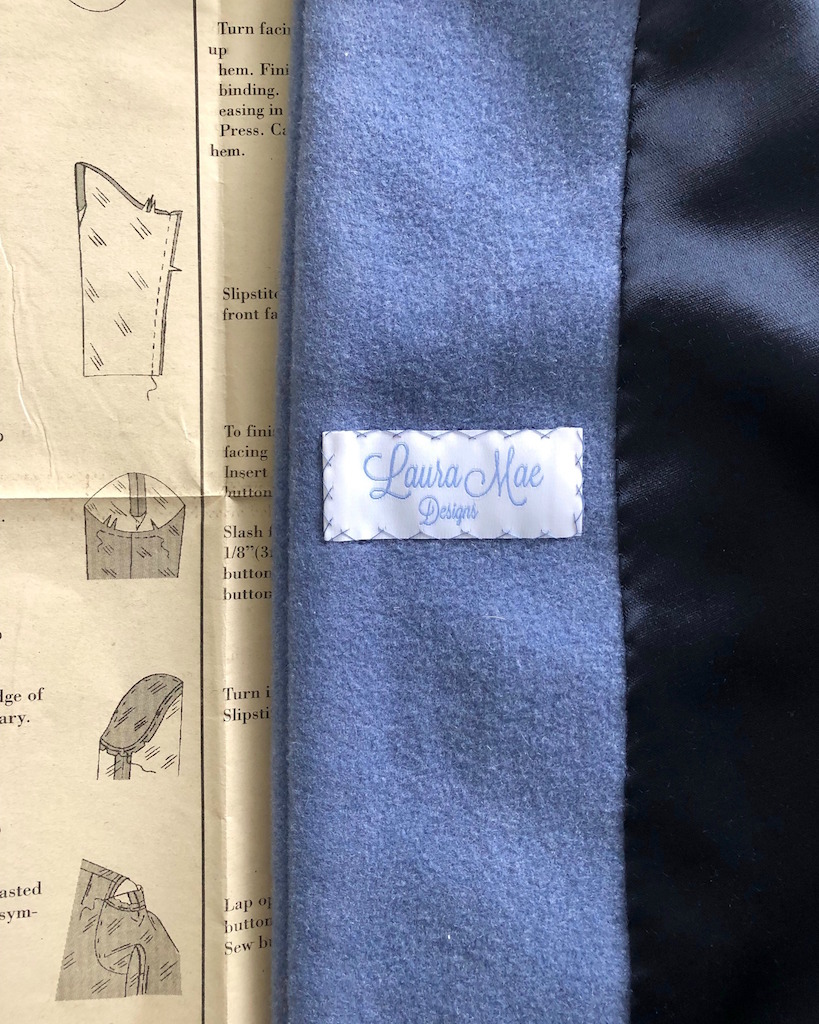
And as a final touch, I added one of my new labels.
I also stitched matching arrow tacks to the covered button to tie those details together.
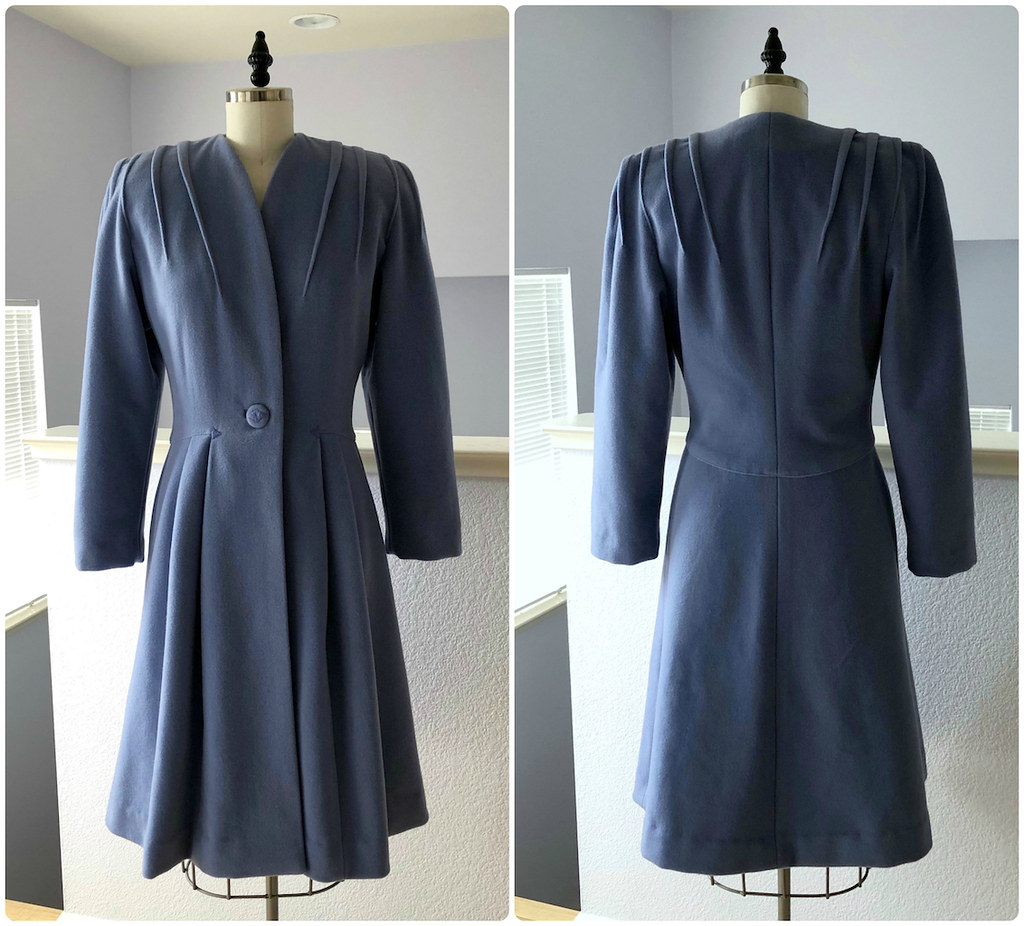
And here is the completed coat!
Labels:
1940s,
In progress . . .,
Sewing,
Vintage Vogue,
Vogue 2475
Tuesday, February 12, 2019
Coat Construction
In an effort to reorganize my sewing room, I have been going through a lot of boxes and bags, some full of old projects. This was one off those. I got as far as constructing most of the lining, and began work on a bright pink textured wool blend for the exterior. Unfortunately, I never really loved the fabric, and so the project was set aside.
So I decided to ditch the pink, and finally found a use for this periwinkle wool coating that I have been trying to match to a project for years.
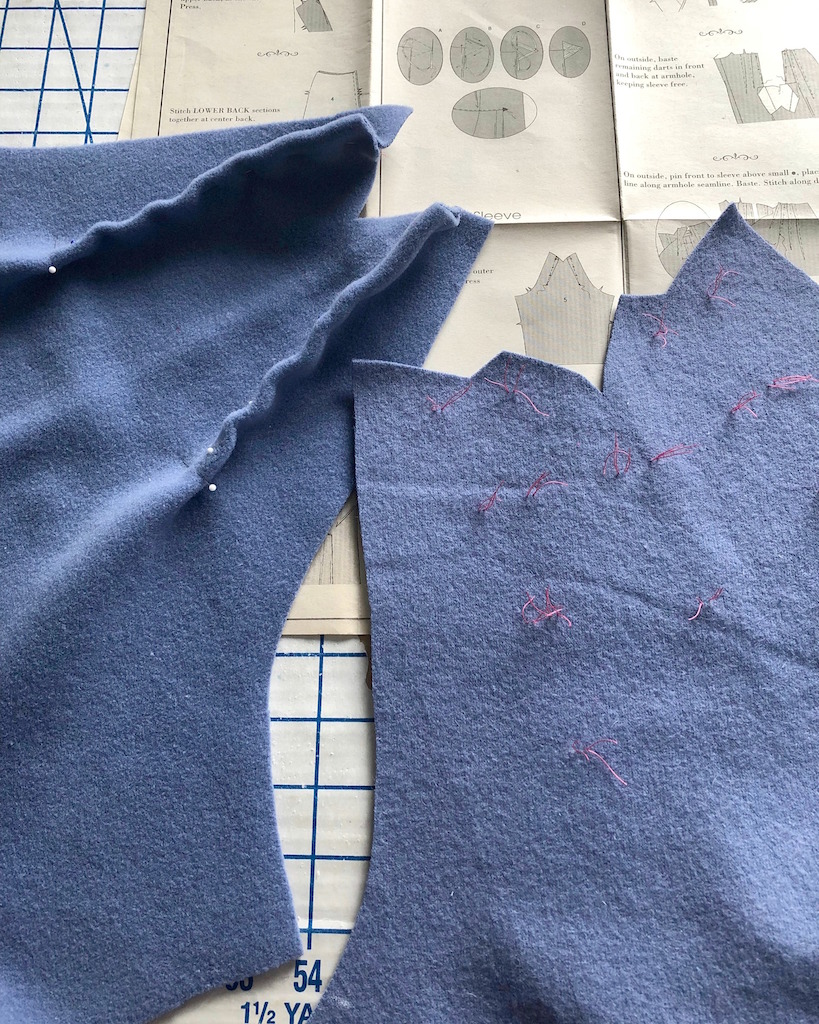
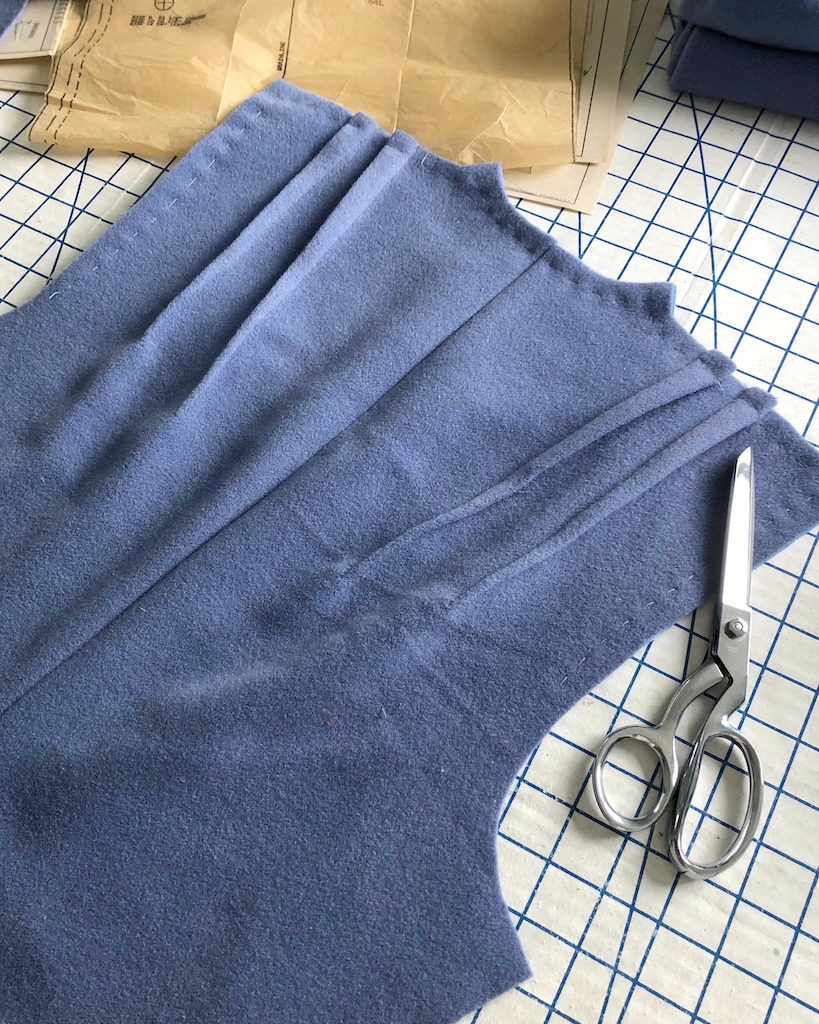
One of the challenges with this particular fabric is that it doesn't like to take marks from pencils, chalk, fabric pens, etc. And with all of those exposed darts, there was a lot of thread tracing to do!
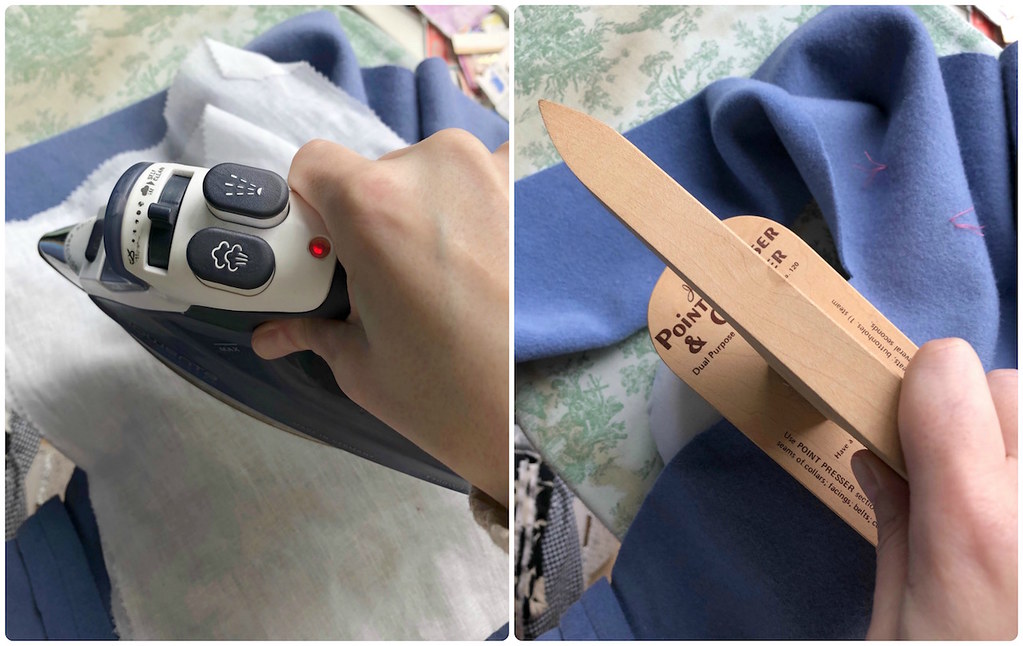
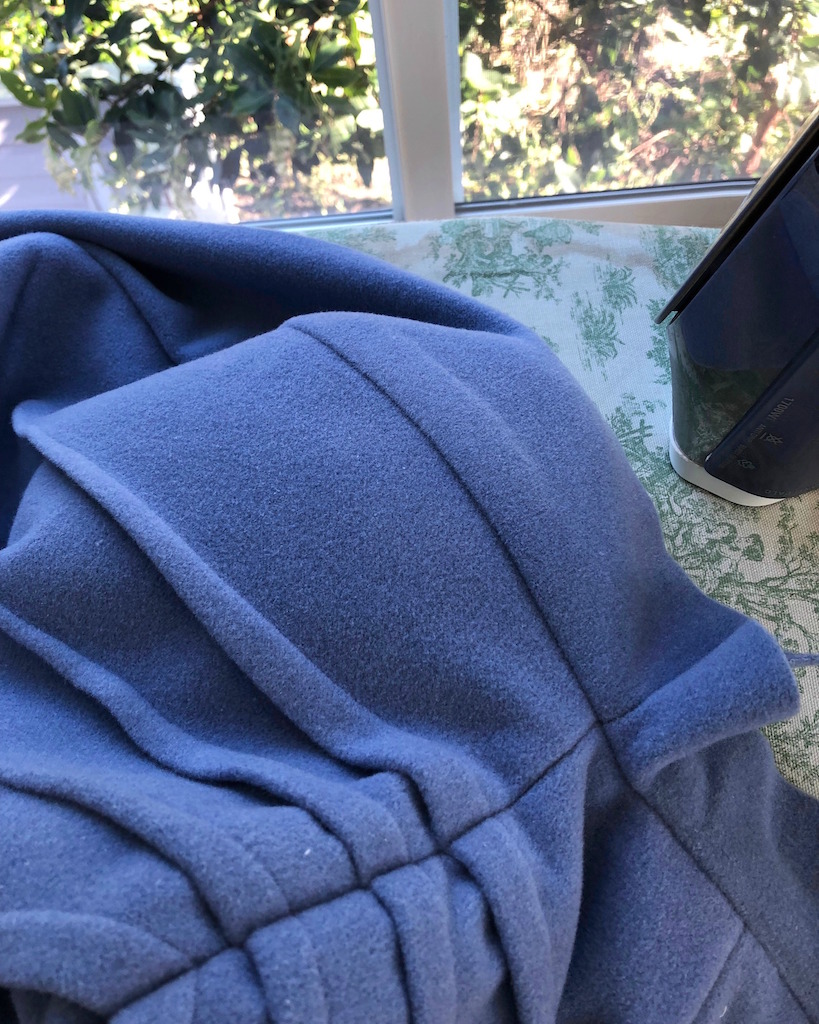
One other challenge I faced was pressing the fabric. As you can see in the following photo, this particular coating wrinkles, but a good press with a clapper was smashing the loft of the fabric.
The solution was to use a press cloth. This was not something that I expected from this fabric, but I was lucky that I experimented with a scrap before messing up a portion of my coat.
I also added a cotton facing to the upper portion of the front and back bodice pieces. The fabric has a lot of give, and I thought this would be a good solution to keep everything from stretching widthwise. (The cotton does not have any extra slack when on a dress form or a body!)
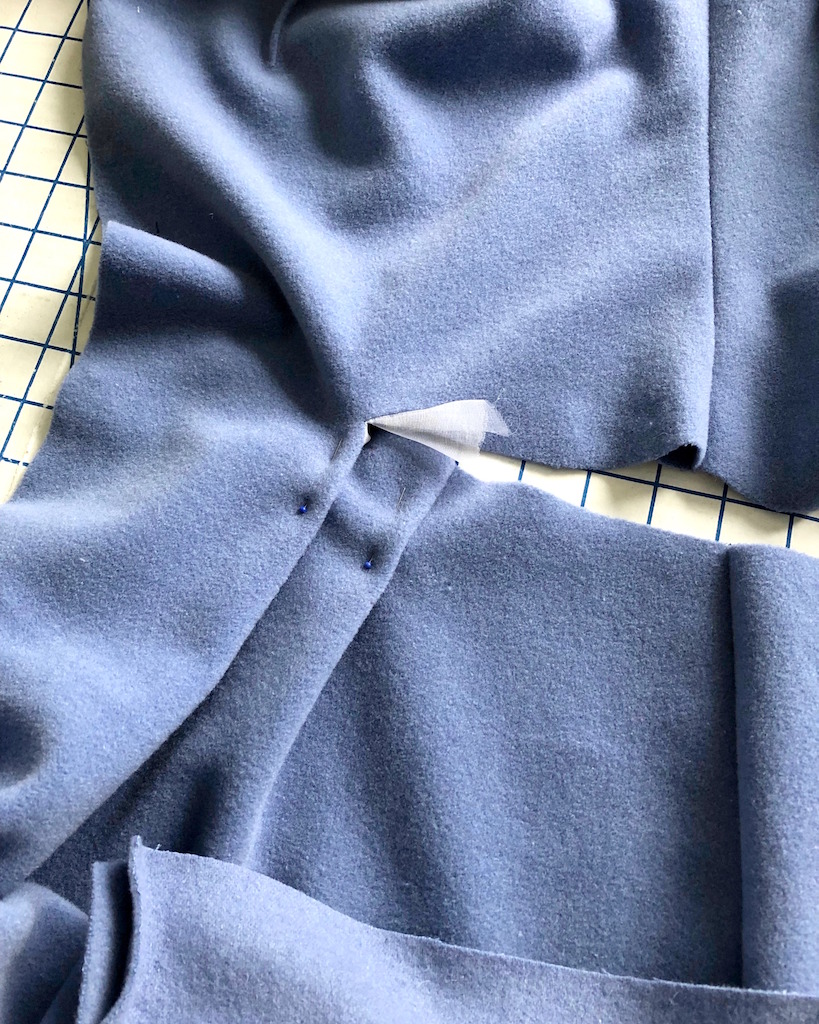
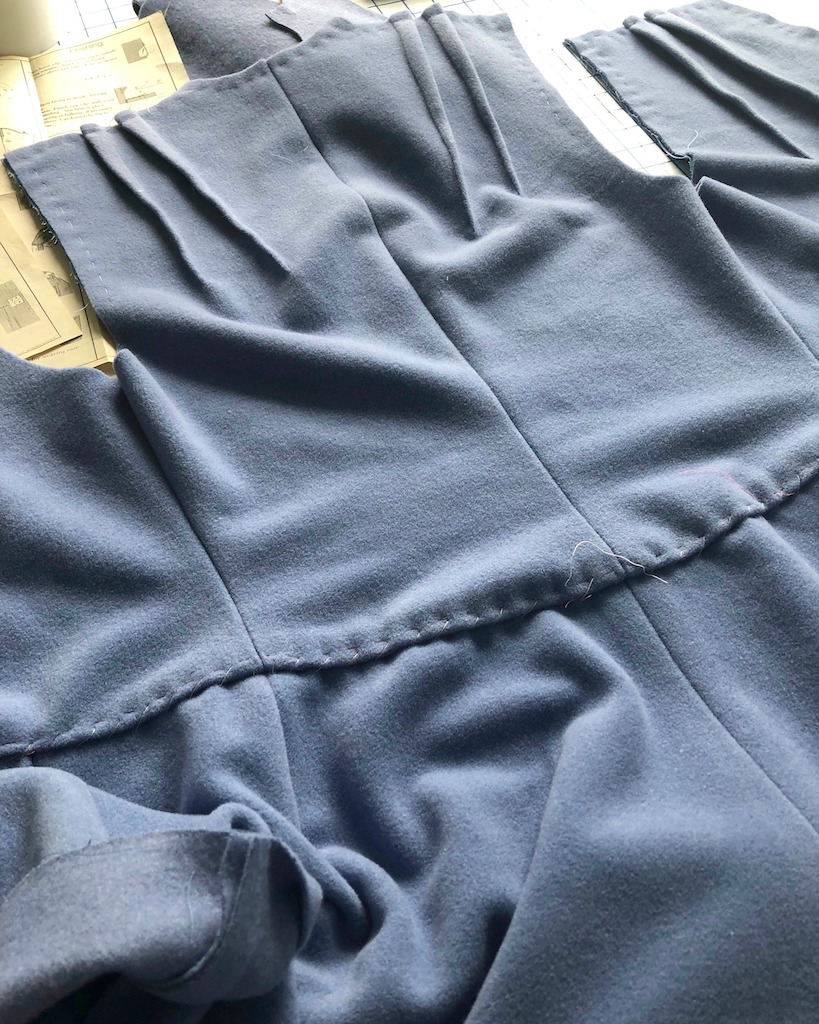
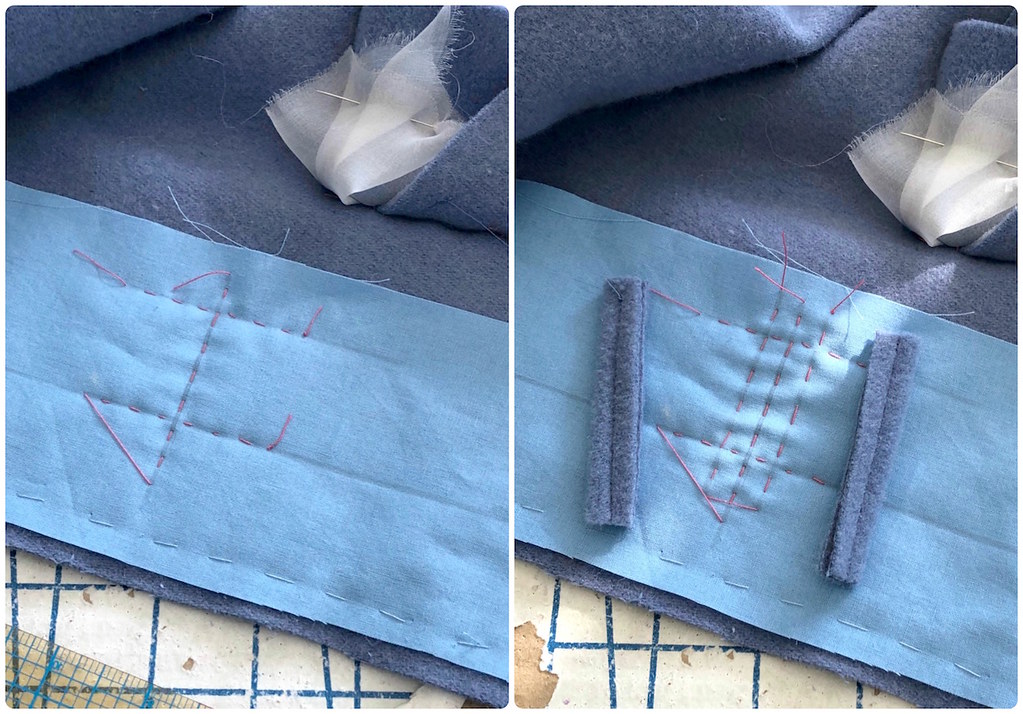
One of my favorite parts of the coat design is the pleating in the front skirt. To construct this portion of the coat, it is necessary to clip into a reinforced corner. The instructions suggest that a line of stitching will do the trick, but I prefer to go the extra mile with a scrap of silk organza.
This wool doesn't really fray all that much, but it still makes me much more comfortable to have an added layer of protection when I am slicing into corners.
At this point, the entire body of the coat is attached at the shoulders and the side seams of the bodice and coat, but not the dropped waist seam.
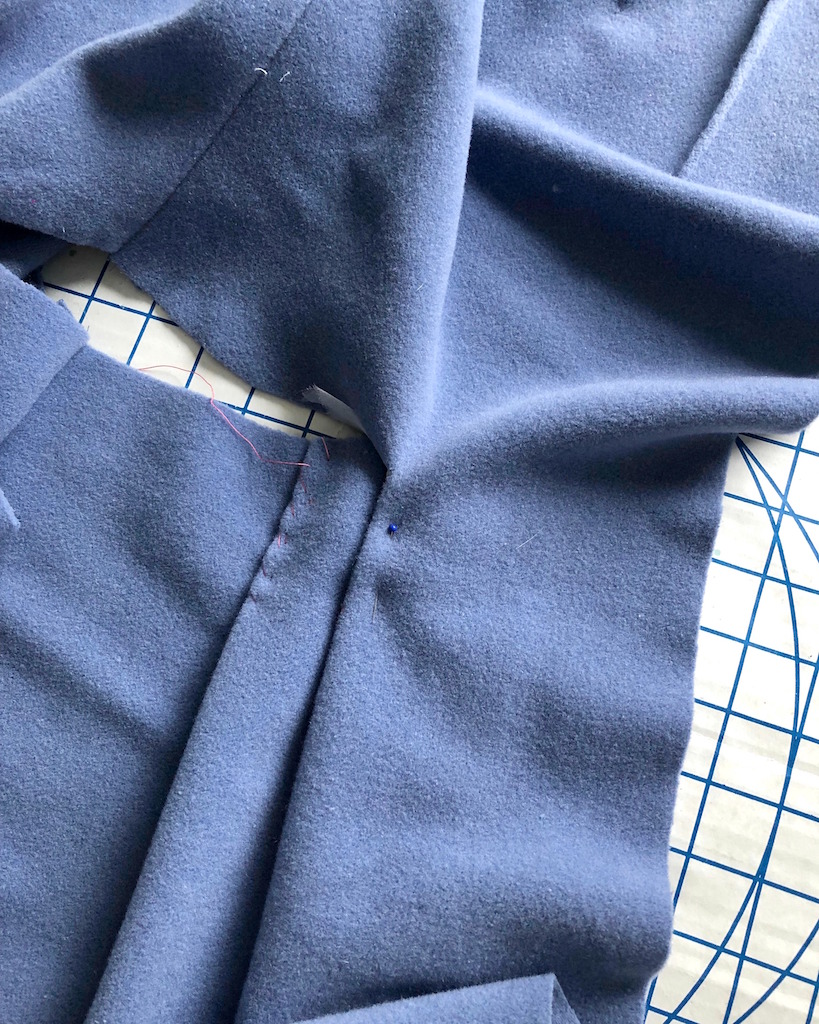
The pleats are then basted into place. I did this by hand with silk thread, knowing that I did not want to fight removing those bits of threads later in the process.
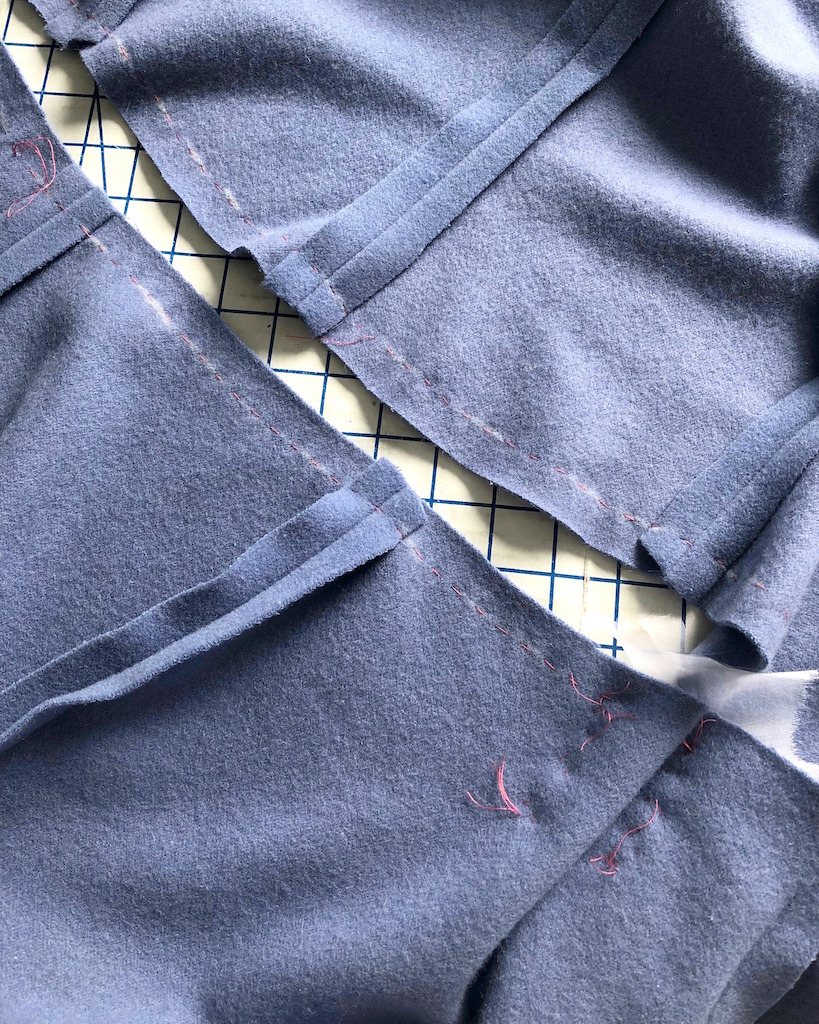
And then it was time for the lapped waist seam. I marked the seam lines in chalk on the wrong side of the wool as best I could, and thread traced those seam allowances, making them visible from the right side of the fabric.
Then that seam was lapped and basted into place by hand.
The coat was fairly heavy at this point with all of that fabric, and there was no way that topstitching that bulky seam was going to go perfectly without a little bit of basting help!
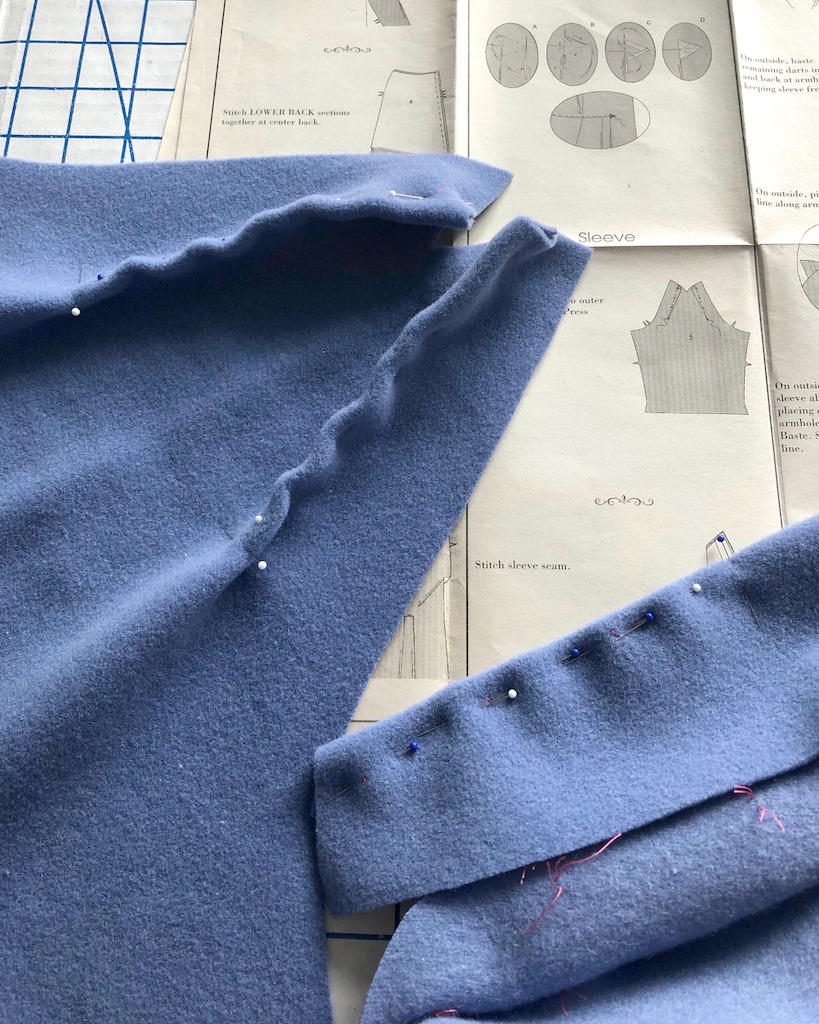
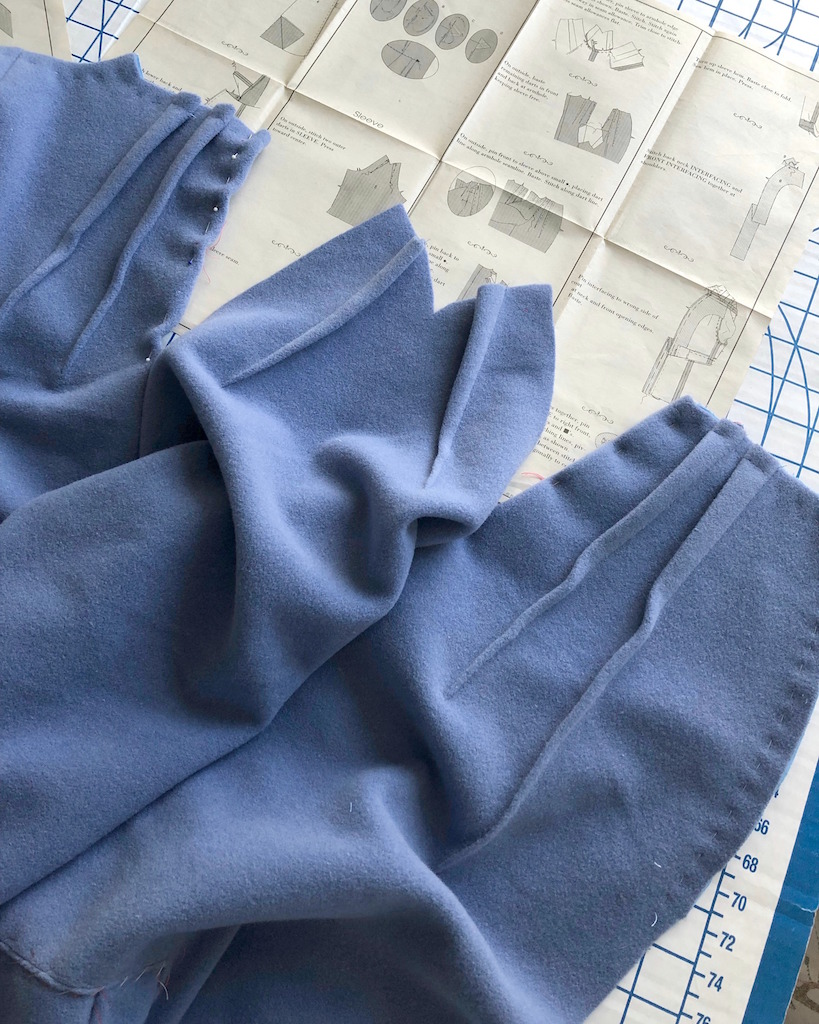
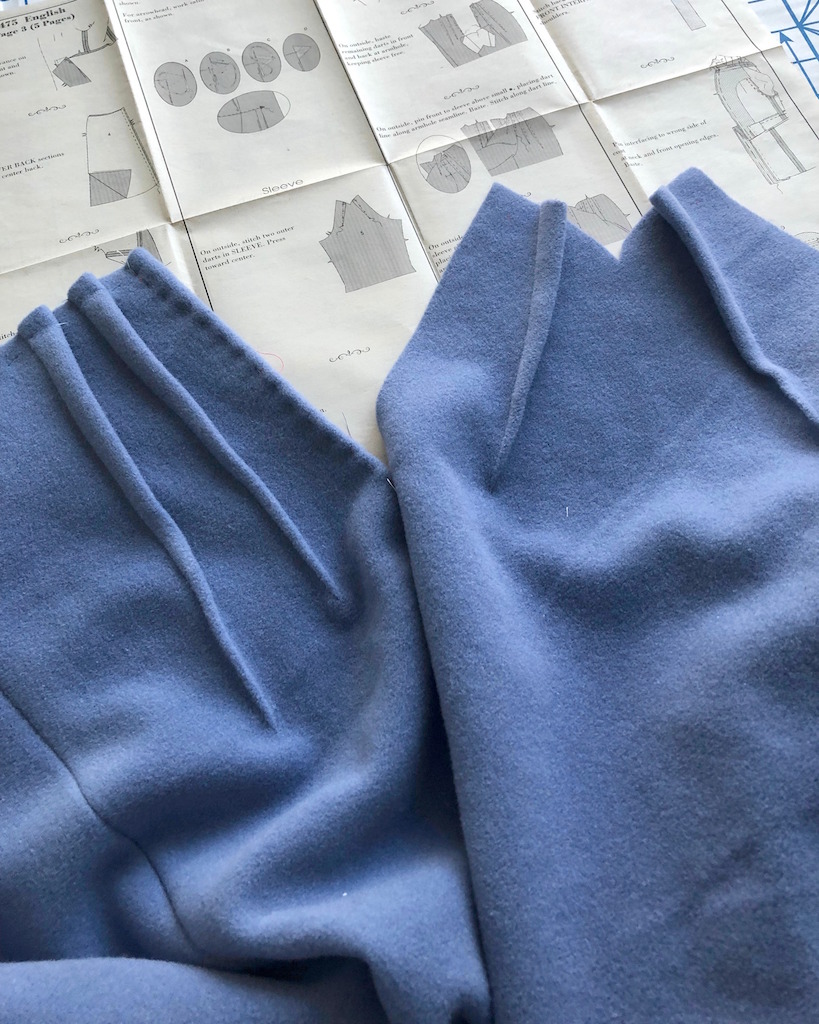
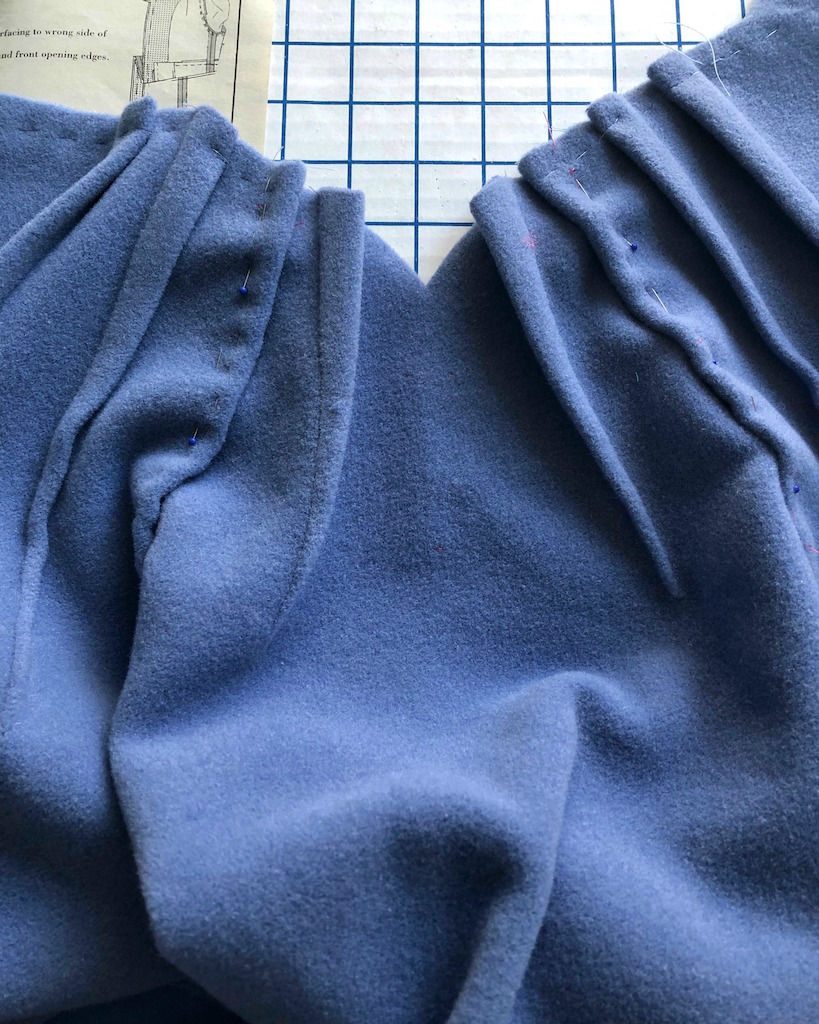
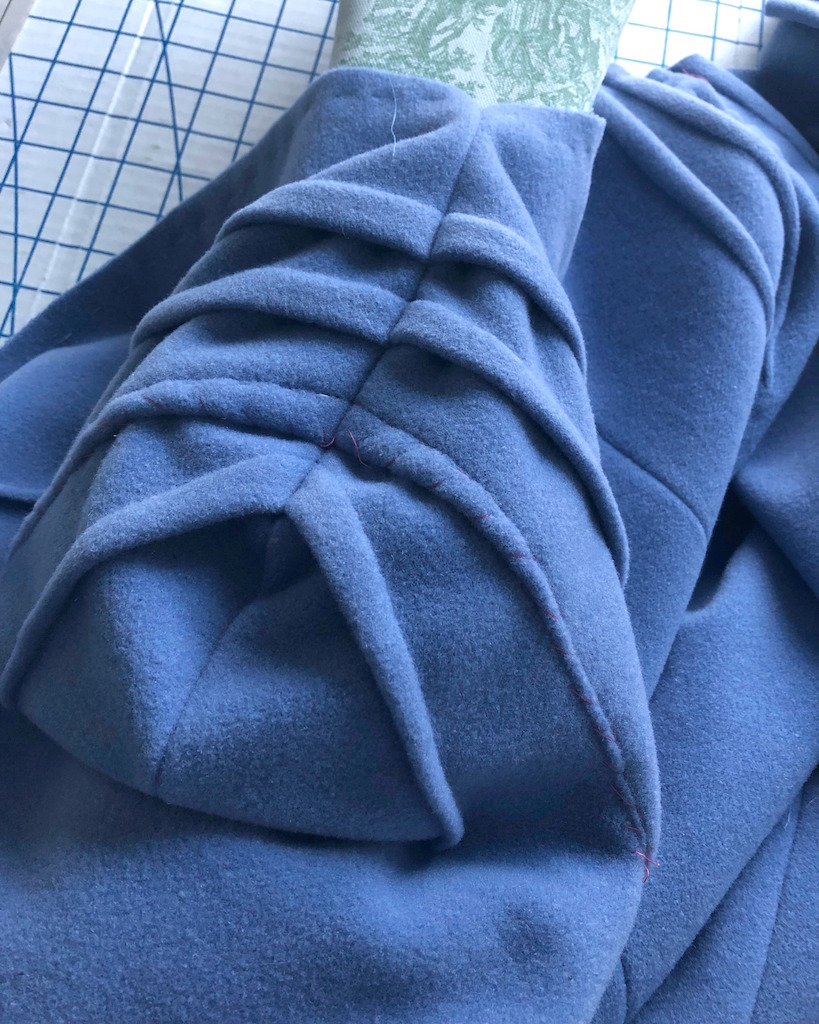
One of the first things that drew me to this pattern was the exposed darts. They are used (rather ingeniously, I think) to attach the sleeves to the front and back bodice pieces.
First, the underarm seamline, from notch to notch, is stitched as normal. The outermost dart on front and back bodice is basted and the lapped over the edge of the matching sleeve, and finally, stitched along the dart.
The final step is to fold the sleeve right sides together to stitch the shoulder seamline.
This is the first coat I have ever come across that is constructed in this manner. There really is nothing like vintage patterns and designs when it comes to clever construction techniques!
The coat is closed with a single button at center front.
I worked a bound buttonhole (of course!) but used the technique that is similar to a welt pocket instead of my favorite bound buttonhole. The two separate lips work especially well with thicker fabrics. I can think of two other modifications to bound buttonholes that I have used in the past . . . my choice really just depends on the fabric I am using and the look I am going for.
I added a piece of seam binding to the front opening edge for stability. Twill tape works too, but it was easier to lay my hands on the seam binding. (There are issues with reorganizing the sewing room - some things have a habit of playing hide and seek until they find their new forever home.)
And that's probably enough for today. I will get through the rest of the construction photos soon!
Subscribe to:
Posts (Atom)