Monday, February 17, 2014

Getting to Know New Patterns


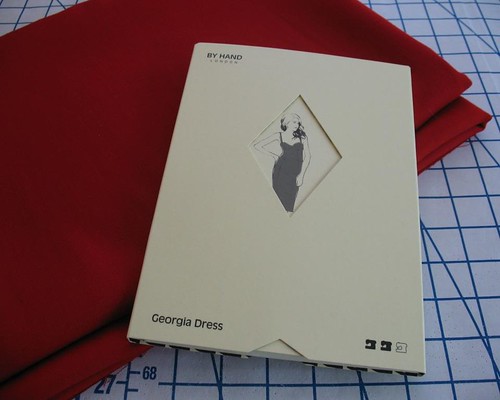
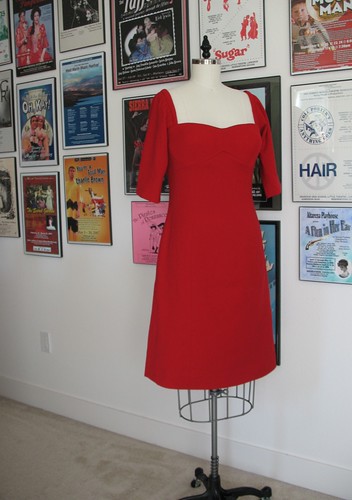
This is my first time working with a By Hand London design.  I love their design ethic, this dress especially, so it was exciting to try out a new pattern company!

There is always a bit of a learning curve with a new brand – each one has a different way of communicating through diagrams and instructions.  Like many independent pattern companies, the layout is clear and pretty to look at, as is the envelope design.  There were, however, a couple of unexpected surprises.  I missed seeing notches on the diagrams – many of the pieces of the dress look similar to one another, or when turned upside down.  I like the ability to glance at an image quickly to make sure everything matches what is happening on my sewing table, and missing those handy identifiers slowed me down (but maybe that’s a good thing!).


I also wish that more information about construction was included.  There is a detailed sew-along on their blog, but I miss having everything in hand - and there seems to be plenty of extra space in the instruction pamphlet to include more specifics.


One missing piece of information is the clipping that is necessary to join the center back point of the skirt to the bodice.  This is an essential point of construction, but it is not found in the written instructions.  There is also no corresponding mark on the pattern piece itself to hint that the interior angle should be reinforced and clipped.  If this was my first time trying to match two seams with a point and an angle, I would be very frustrated.  To be fair, the clipping is mentioned in the Georgia Sew Along, Step No. 7, but I still wish it was included with the pattern.
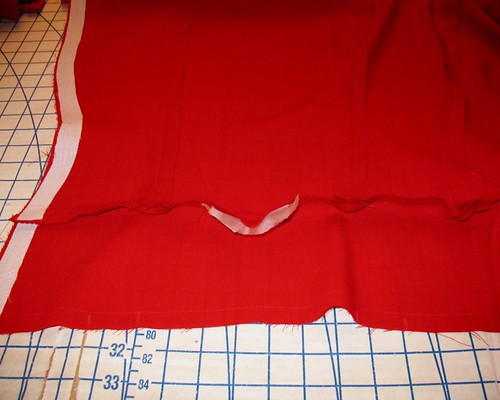

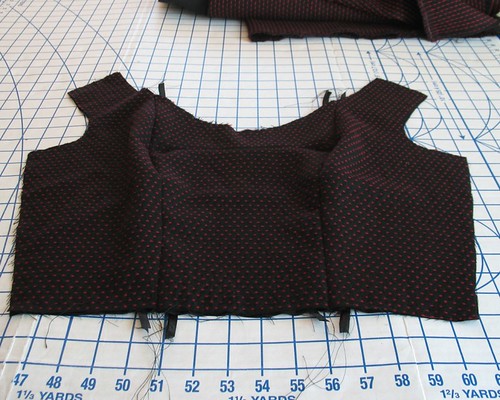
My wool (like many wool fabrics) has a tendency to fray.  Because the bodice needed to be clipped, I grabbed a scrap of organza and used the same technique I use to reinforce gussets.  I would hate for that point to wear out long before the rest of the garment does!


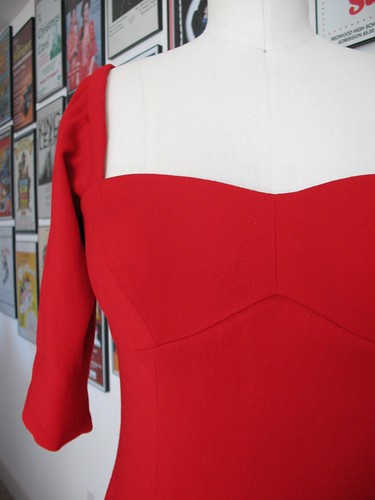
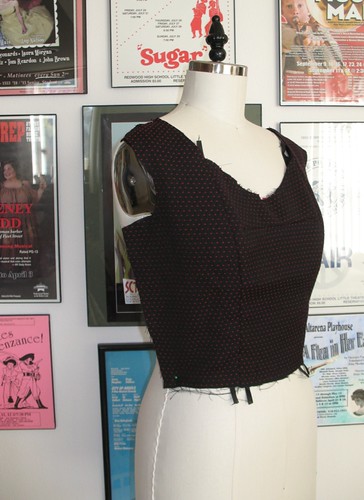
The upper edge of the bodice seemed like it would be prone to stretching so I used seam binding to reinforce my stay-stitching.

Although not entirely clear, I believe the given hem allowance is 1 inch according to the instructions.  I prefer to have a deeper hem on a dress that has a straight skirt – I think it looks much nicer.  I ended up adding one inch to the torso length and another inch to the hem, and then folding up those two extra inches.  Looking at the pattern sketches, I was expecting a bit more length.
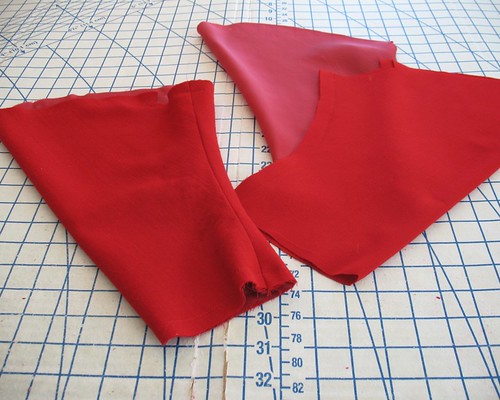

Even though this wool is not itchy, I knew I wanted to add a full lining – I love pretty insides!  I did love how clear it was that the opening edge of the lining must be opposite to the fabric if wrong sides are to be placed together – it is the most clear explanation I have seen yet (a couple of McCall company patterns I have come across have diagram typos in similar situations).


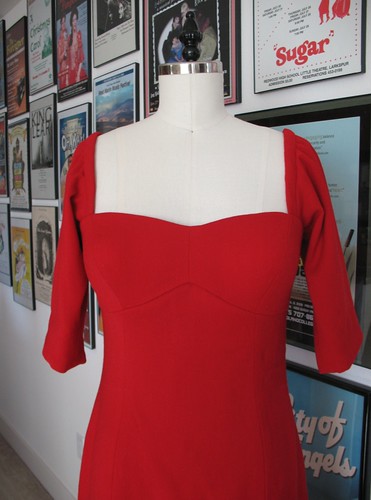
All of that being said, this is a lovely design that I am sure I will make it up again – I would love a cotton version for summer, perhaps lengthened to mid-calf . . . and that is just the beginning!

Sunday, February 16, 2014

A Tale of Two Muslins


Some days I forget to take my own advice.


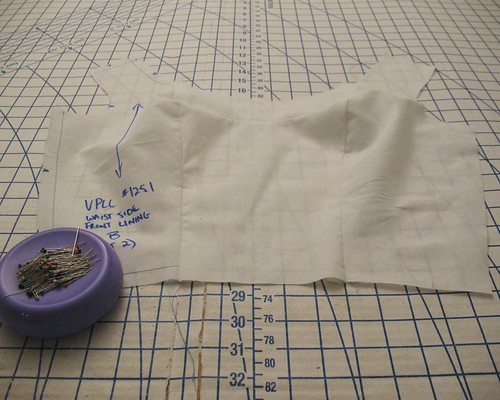
Case in point:  I have been making the same adjustments for years, but it was late (at least that is the excuse I am going with) when I was cutting into the muslin for my next Britex project.  After cutting two of the skirt pieces, I realized that I should have added my torso length to those pieces – whoops!  Since I already had cut two, I decided/hoped that this was going to be the pattern that did not need a single adjustment, and powered on.  Big mistake.  The muslin did not fit correctly through the hips . . . surprise, surprise.  I started messing with side seams, but I was losing the curves and getting frustrated.


The only thing to do was start again.  Turns out it would have been much more efficient to toss the first two skirt pieces.  Ggrr.


Because my trusted alteration of lengthening the torso once again did the trick.


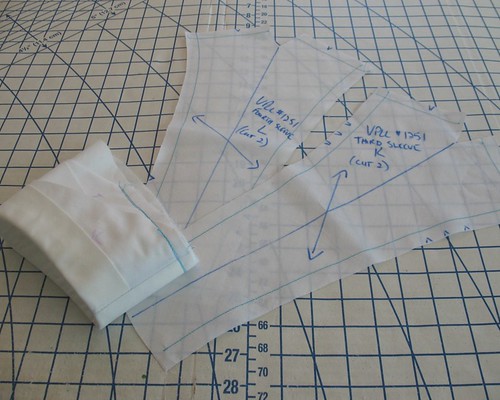
This also gave me another opportunity to play with the added sleeve pieces.


I like to start out with an existing pattern piece, but as you can see, I ended up with something quite different.


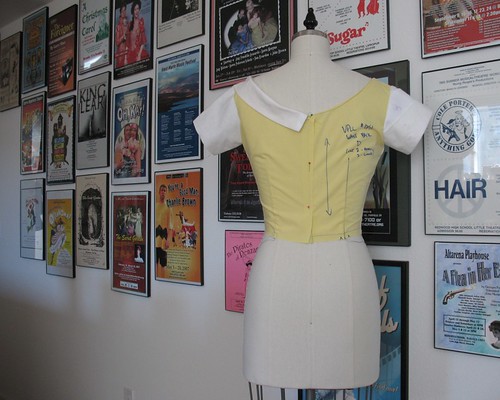
A shortcut I used to take was pinning myself into a muslin.  But really, how much time does it take to baste in a zipper?  Not much, especially since it does not need to be pretty.


And the reward is so worth it!


I suppose it was a good reminder to stick with what works!


Tuesday, February 11, 2014

Rainy Day Knits


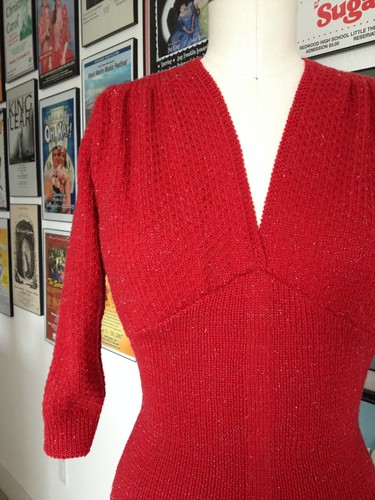
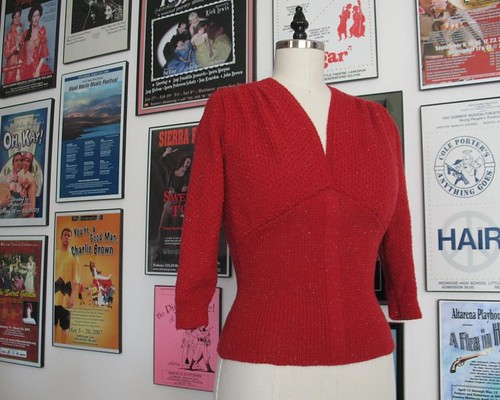
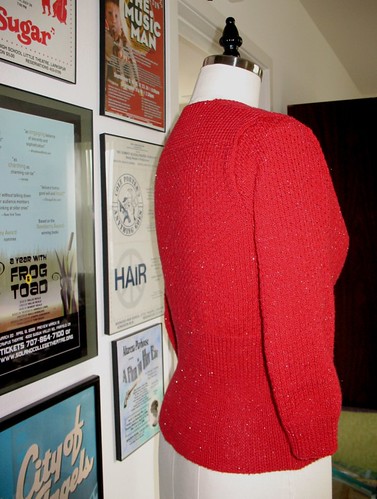
This past weekend I really did not feel like doing much of anything - but the one thing rainy days are perfect for is knitting.


Now to find the perfect buttons!  I actually like the sweater without, but I have a feeling that a row of buttons is really going to finish this project.


Monday, February 10, 2014

Ceil Chapman, Draping Genius


My recent obsession with everything Ceil Chapman means that my eye goes straight to her designs when I peruse Pinterest.  I am usually lazy about clicking through to original sources, but something made me follow through with this picture, and boy am I glad I did - because it led to a treasure trove of gorgeous designs.


Mme. Grès is often referred to as the queen of draping, but I believe Ceil Chapman gives her a run for her money.  So I was thrilled to find these patented examples of her designs; how wonderful to find original source material, complete with dates, and even a few clues as to construction if you look closely.


It also brought to mind the idea of fashion copyright - a hot button topic in recent years.


Certainly there are a limited number of ways to cover the human form, and I suspect that at this point, they have all been done before.  Can anything really be considered new or fresh?  Comme des Garçons “Lumps and Bumps” Collection from 1997 comes to mind – but other than wearable art, would it not be possible to find “copies” of any garment if you look hard enough?  


And what about an a-line dress – can someone claim ownership over a design that is incredibly basic?  How complex does it have to get before a design is truly distinguishable from another?  I can see the designer of a massively intricate haute couture creation getting credit in perpetuity for their genius, but then again, how likely is it that someone would or even could copy it.  


Does anyone really think that the disposable copies that are mass produced and hocked by fast fashion companies are anything like the designer originals?  I doubt that someone willing to spend $500 for a designer dress with an expectation of quality goods is going to be happy with the cheap knock-off version.  The average consumer would never be able to afford that expensive design.  So is the designer, in fact,  losing a customer?  Probably not.  And is this terribly different than the department stores that were purchasing quality goods from fashion houses fifty and sixty years ago and having a talented individual create a house brand version?   


Since consumers (or the majority of them) no longer seem interested in buying quality instead of quantity, and demand that the very latest must-have item arrive at their door tomorrow morning, getting rid of the H&Ms and Forever 21s of the world seems rather hopeless.  After all, quality and old world craftsmanship is never going to happen quick enough for people in this instant gratification age.


How about using part of the design such as the bodice, and pairing it with a different skirt?  Would that be considered a breach?  Here are certainly instances where Ms. Chapman has borrowed her very own ideas.  A petal bust here, a surplice bodice there, simply swapped with a skirt from a previous design.


And what would you think about someone re-producing one of these designs - the patent, after all, is long expired.  Personally I would find it extremely tacky to make a profit off of a line for line copy (but I don't imagine huge corporations really care about anything other than money).


But putting aside the question of whether or not there is anything proprietary about fashion design, these looks are fabulous.  And I will admit that I am not above borrowing or being inspired by those who I consider the masters.  Isn't imitation considered the highest form of flattery?  Legality aside, I sure do love looking at and being inspired by beautiful things. 


Now if only I could find an original version of the pattern I am currently working on or the original patented line drawings - wouldn't that be something!?  


[Click on image for source]

Thursday, February 6, 2014

An Interview with Seamstress Erin

I have been fortunate to meet some wonderful bloggers from The Bay Area over the past couple of years, including the lovely Erin of the blog Seamstress Erin.  Have you seen her new pattern release, the adorable Presidio Purse?


She has been interviewing bloggers in a recurring series regarding their thoughts on Sewing & Style - if you would like to hear more of my ramblings on the subject, head on over to Seamstress Erin.

Tuesday, February 4, 2014

Origami Sleeves


Another wonderful feature of this design is the rather intricate sleeve.


When it comes to measurements and drafted pieces not matching up (vintage or contemporary patterns alike), I always assume I am the one who has made the error.  However, when it comes to directions, I often find myself second guessing the illustrated diagrams and wording even before getting the pieces in my hands.


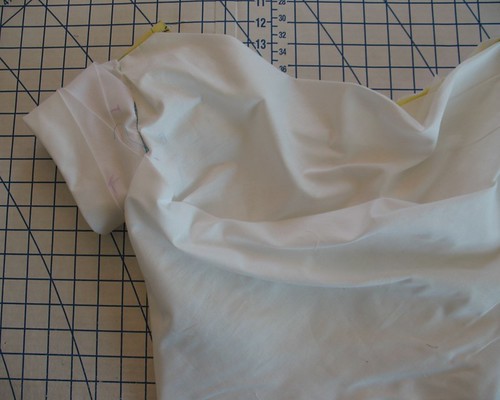
And I have to admit that when I happened upon the diagrams for this sleeve craziness, I scoffed.  What were they thinking sewing things with raw edges out?!  Well let me tell you, the writer of these particular directions knew exactly what they were doing with these origami-like creations.


Thank you, my muslin, for proving me wrong before I made a huge mistake!  By the way, all of those bias cut layers use a lot of fabric and I would have been rather peeved if I had to re-cut them out of expensive or precious material.  


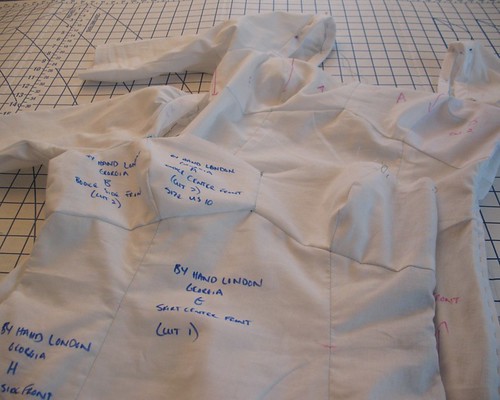
They also look very similar.  To help keep everything straight, I pinned the letter names of each individual piece right on the fabric until the sleeve was completely finished.


Fabric choice becomes important with these sleeves.  I am using a mid-weight wool, and anything thicker would make them just about impossible to construct.  There is a whole lot of bulk going on here and a bunch of trimming of seams.  If I found a fantastic brocade that demanded to be made up using this design, I would probably opt to do without all the extra overlapping pieces.  I think a plain three-quarter length sleeve would go beautifully with this look, although for my first attempt I am sticking with the original – if only for the challenge!


First misunderstanding resolved!

Sunday, February 2, 2014

Bodice Muslins & Measurements


When I received this pattern, I did not have a suitable fabric in hand, but I wanted to get started just the same. 


First up, the muslin.  These days I often start out with a practice run, mostly for fit.  In this particular case, I would highly recommend one because of the complicated construction.  This is my kind of pattern – it takes more than a simple scan of the pieces and directions to figure out how everything fits together.  Also, there was a bit of grading to do, and I wanted to make sure everything was going to fit together properly. 


As I have mentioned, this dress is a vintage size 12/35” bust.  My first surprise was the finished measurements:  bust 35”, waist 25” – that means that no ease is included.  I initially thought that I had made an error.  But after checking and re-checking, the numbers were not changing. 


I recall learning in a class that seam allowances on historical fashions were often tiny (as small as ¼”) to save precious fabric.  I struck me as odd that women did not bust seams wide open, until I thought about their foundation garments.  Throw a corset on and your ribcage and waistline is not able to expand very much, making those tiny little seam allowances safe from tearing open after a deep breath.


It should also be noted that the RTW sizing of this pattern (35/25/36) would most likely be achieved with the aid of a girdle, long-line bra, and perhaps even a corset.  Since the body is already molded into shape with some serious undergarments, generous amounts of ease are unnecessary.  In fact, having no ease at the waistline would further help to achieve an hourglass figure by pulling everything in.  Hello, waist-stay!


I am not familiar, however, with a sleeved dress that is lacking an amount of ease through the bustline. 


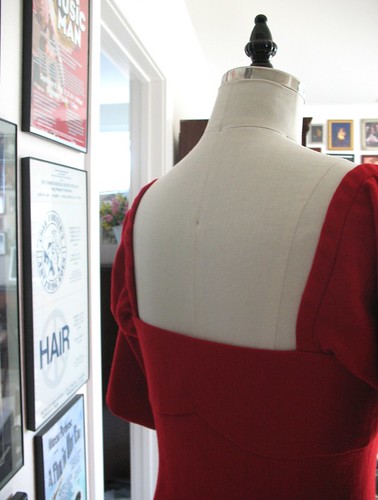
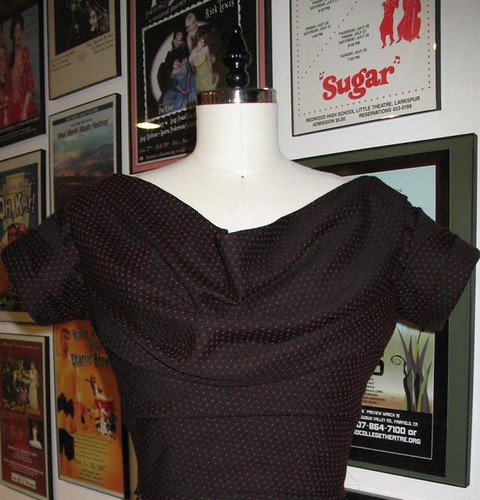
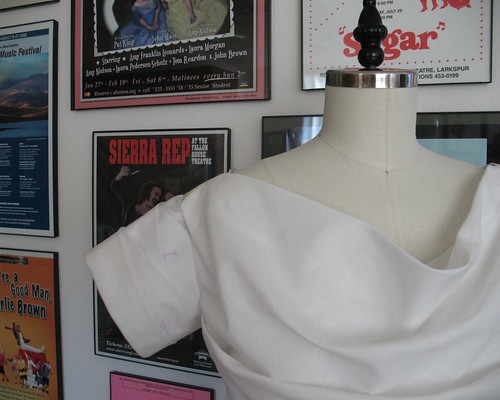
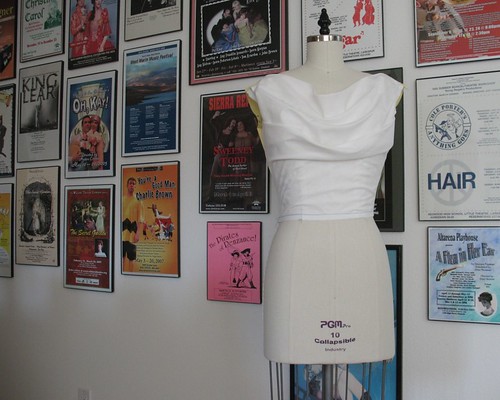
It is not completely clear from the illustration, but this design sits quite wide at the neckline (as I found out once I put the muslin on my dress form).  It therefore makes sense that the piece would be drafted similar to a strapless gown.  This design has a draped bodice that lays over a fitted shell or “lining.”  That lining needs to fit snug to the body to create the proper draping and keep the bodice from falling down.  Another brilliant design feature from Ceil Chapman!


First mystery solved!